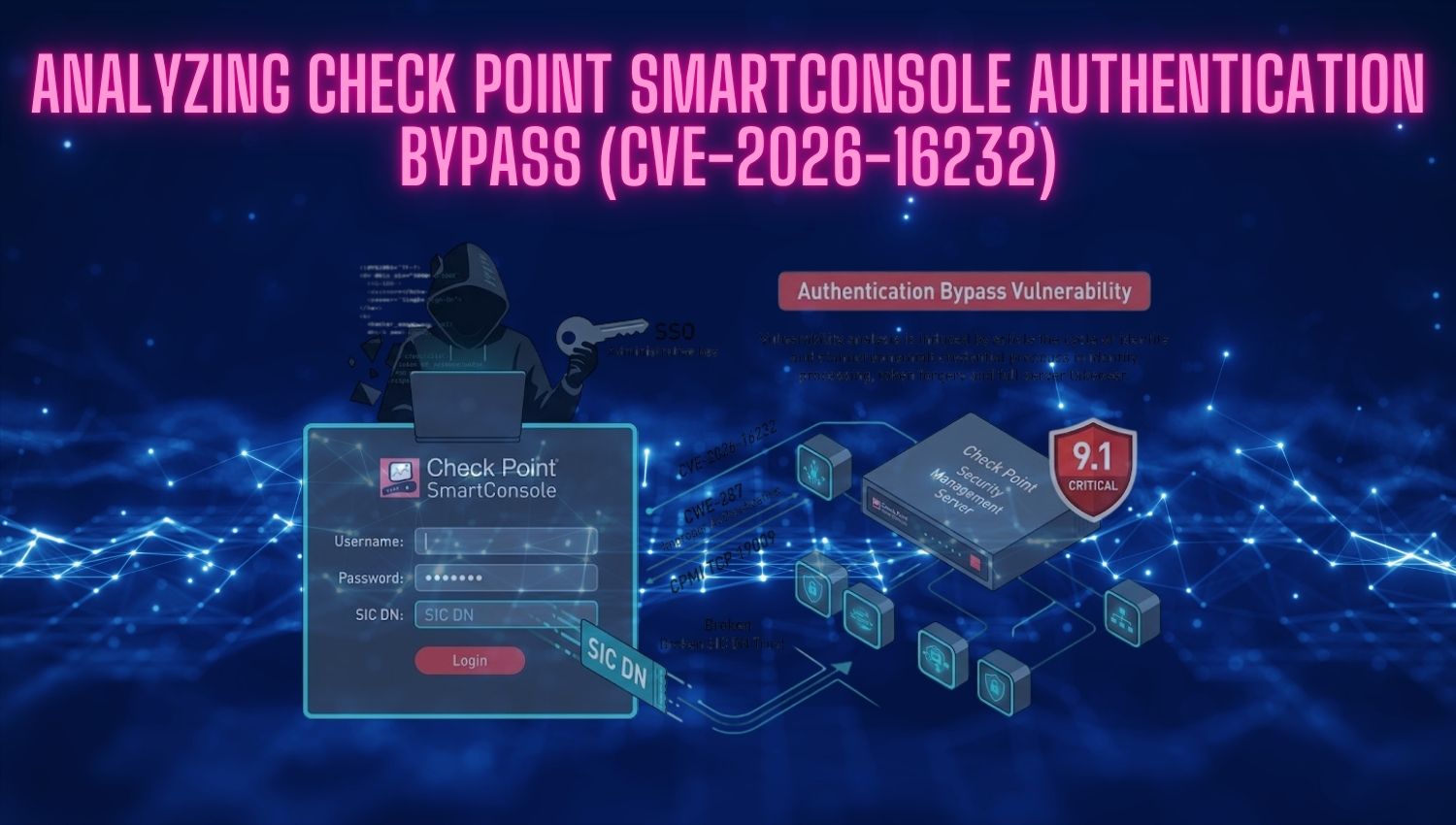
Analyzing Check Point SmartConsole Authentication Bypass (CVE-2026-16232)

AnalyzIng Check PoInt SmartConsole AuthentIcatIon Bypass (CVE-2026-16232)

Introduction Check Point Security Management Servers and Multi-Domain Security Management (MDS) platforms serve as the central control plane for enterprise network security. They manage security policies, threat prevention rules, user directories, and gateway configurations across global corporate environments. A critical vulnerability designated as CVE-2026-16232 was discovered within these systems, drastically elevating organizational risk. This flaw allows unauthenticated remote attackers to completely bypass SmartConsole authentication mechanisms, forge administrative

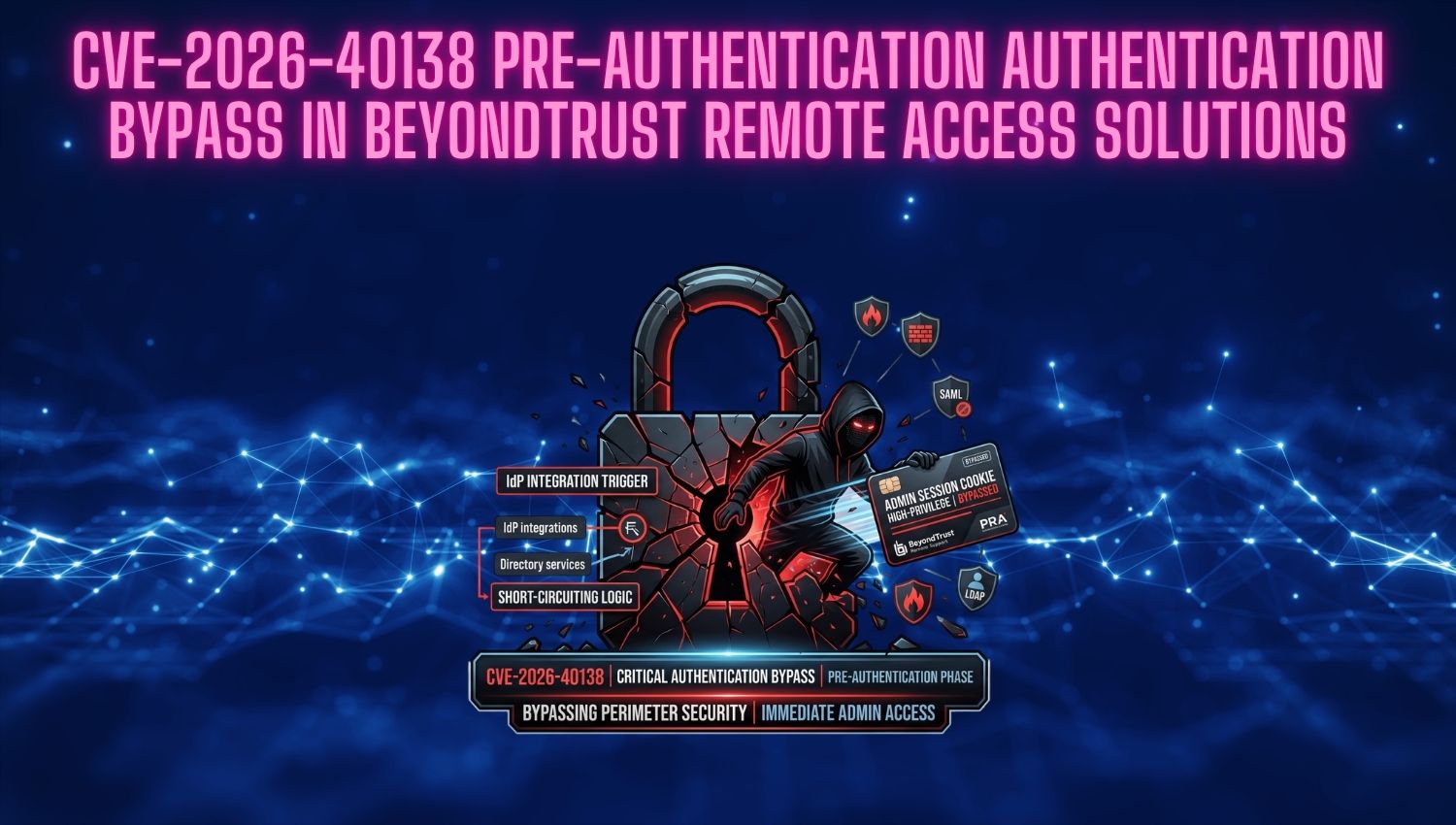
Deep Dive CVE-2026-40138: Pre-Authentication Authentication Bypass in BeyondTrust Remote Access Solutions

CVE-2026-40138 Pre-AuthentIcatIon AuthentIcatIon Bypass In BeyondTrust Remote Access SolutIons

Introduction In the modern corporate landscape, privileged access and remote control solutions form the backbone of IT administration and technical support infrastructure. However, because these systems inherently possess elevated rights over entire enterprise networks, they represent highly attractive targets for sophisticated threat actors. In July 2026, a critical security vulnerability designated as CVE-2026-40138 was publicly disclosed, impacting BeyondTrust’s flagship remote access software lines. Classified as

Critical Threats in Critical Infrastructures: June 2026 Cybersecurity Analysis

Critical Threats in Critical Infrastructures June 2026 Cybersecurity Analysis

Introduction Modern computing ecosystems are becoming increasingly complex due to the convergence of cloud-based architectures, intricate network protocols, and widespread web integrations. While this complexity yields an expansive attack surface for threat actors, it mandates proactive patch management for defensive teams. This rapid digital transformation has outpaced traditional perimeter security, leaving legacy frameworks highly susceptible to sophisticated, automated multi-stage attacks. June 2026 marked

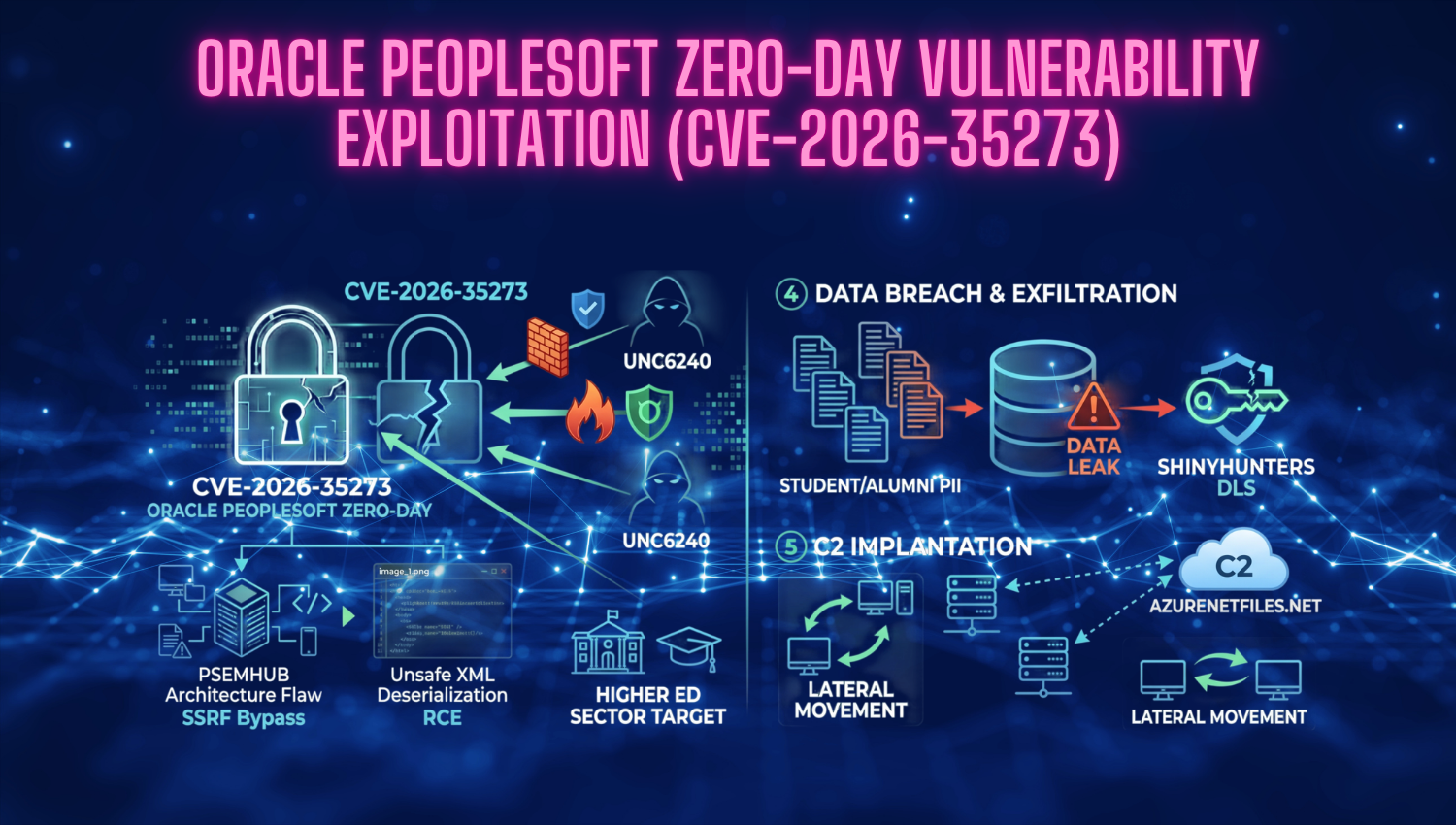
Oracle PeopleSoft Zero-Day Vulnerability Exploitation (CVE-2026-35273)

Oracle PeopleSoft Zero-Day Vulnerability Exploitation (CVE-2026-35273)

Introduction Enterprise Resource Planning (ERP) systems store an organization’s most sensitive financial, operational, and personal data, making them prime targets for sophisticated cyber threat actors looking to maximize their leverage. On June 10, 2026, Oracle released an urgent, out-of-band security alert addressing CVE-2026-35273—a critical remote code execution (RCE) vulnerability actively exploited as a zero-day within the Oracle PeopleSoft PeopleTools component. Attributed to the advanced persistent threat group UNC6240 (which has

Automatically Generated Malware with AI: Misuse of Artificial Intelligence

AutomatIcally Generated Malware wIth AI MIsuse of ArtIfIcIal IntellIgence

Introduction In recent years, artificial intelligence (AI) has introduced innovations that could fundamentally shake the cybersecurity world, while simultaneously giving rise to new and highly adaptive threats. Moving beyond classical malware development methods, automated and far more sophisticated malicious software systems powered by AI have provided threat actors with powerful tools to automate attacks, evolve malware code, and bypass traditional security barriers. The capabilities

File and Hash Threat Intel TryHackMe Walkthrough

Introduction File and Hash Threat Intel is a beginner-friendly blue team challenge hosted on TryHackMe, designed to help SOC analysts and cybersecurity learners build practical skills in malware detection, hash analysis, and threat intelligence workflows. This room simulates real-world scenarios where attackers disguise malicious files using misleading names and extensions, requiring defenders to investigate using hash

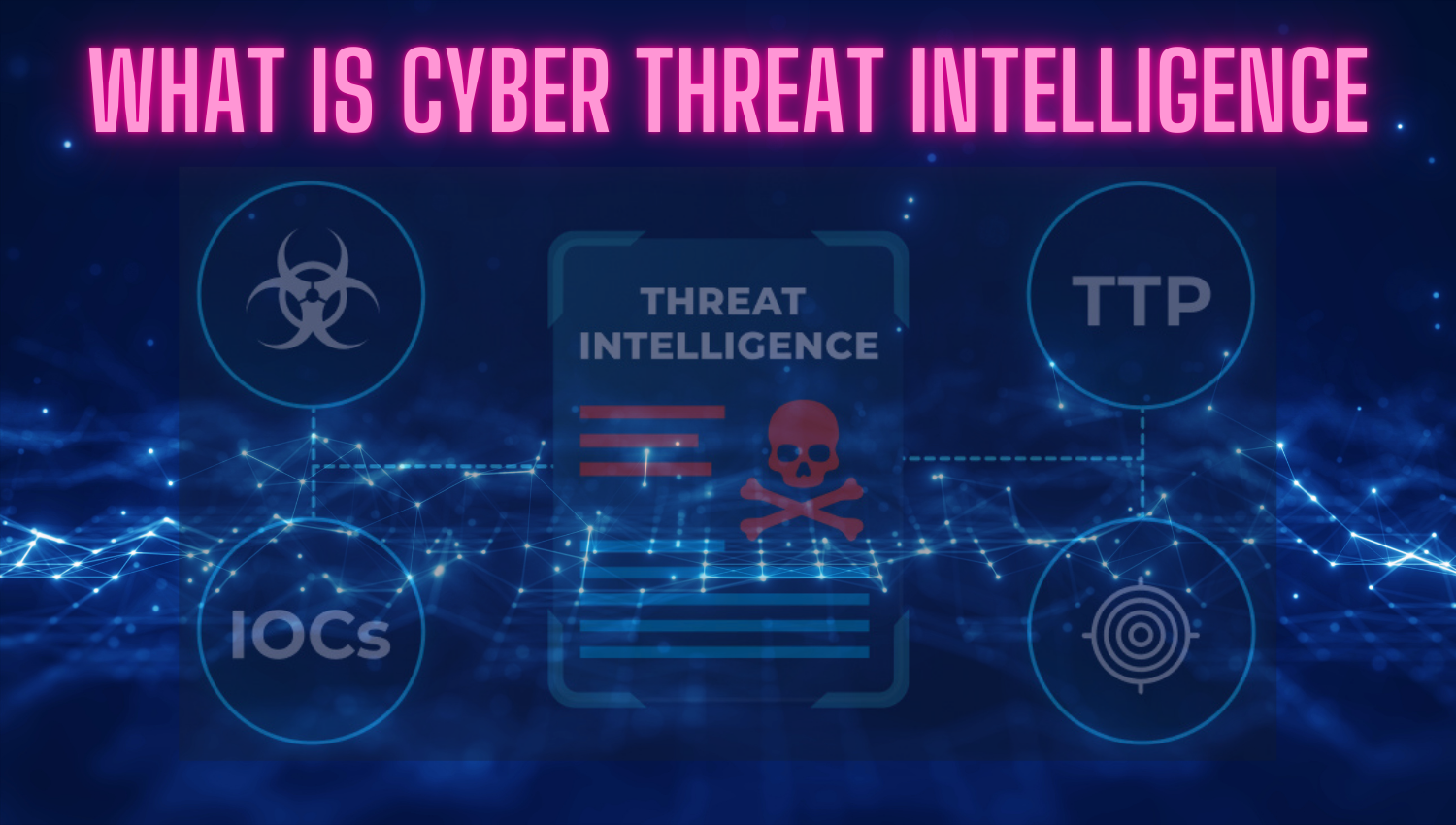
What is Cyber Threat Intelligence: A Comprehensive Guide

What is Cyber Threat Intelligence A Comprehensive Guide

Introduction In today’s digital landscape, cyber threats are evolving more rapidly than ever, presenting serious challenges for organizations and individuals alike. As technology advances and our reliance on digital systems grows, attackers are constantly developing new and more sophisticated methods to breach defenses, steal information, and disrupt operations. Traditional security tools and reactive approaches are no longer sufficient to keep pace with

Shodan Usage Guide: Detecting Vulnerable Devices with Python

Shodan Usage Guide Detecting Vulnerable Devices with Python

Introduction Shodan is often referred to as the “search engine for hackers,” but its applications extend far beyond malicious use. It is a powerful tool for discovering internet-connected devices, such as webcams, routers, servers, and even industrial control systems. Unlike traditional search engines that index websites, Shodan indexes devices and the services they expose to the internet. This unique capability makes it an invaluable resource

Cyber Threat Management: Security in the Digital World

Cyber Threat Management Security in the Digital World

Introduction In an increasingly digital world, the landscape of cyber threats is evolving at an alarming rate. Organizations of all sizes and sectors are facing unprecedented challenges as cybercriminals develop more sophisticated methods to exploit vulnerabilities in information systems. The consequences of these threats can be devastating, leading to financial losses, reputational damage, regulatory penalties, and operational disruptions. As such, effective cyber threat management

C2 Tracker: The Importance of Monitoring Command and Control

Introduction Cybersecurity has become a critical field in an ever-evolving threat landscape. Cyber attackers often use Command and Control (C2) infrastructures to execute and manage their attacks. These infrastructures enable malicious software and attackers to communicate with victim devices. A C2 Tracker is a tool that helps detect and prevent cyber threats by monitoring and analyzing these communications. This article will