

Introduction
Modern computing ecosystems are becoming increasingly complex due to the convergence of cloud-based architectures, intricate network protocols, and widespread web integrations. While this complexity yields an expansive attack surface for threat actors, it mandates proactive patch management for defensive teams. This rapid digital transformation has outpaced traditional perimeter security, leaving legacy frameworks highly susceptible to sophisticated, automated multi-stage attacks. June 2026 marked a pivotal moment in the cyber threat landscape, witnessing a record number of zero-day exploits and critical vulnerabilities that heavily targeted Microsoft infrastructures, cloud databases, and endpoint network components. Driven by advanced persistent threats (APTs) and opportunistic ransomware syndicates, these emerging vectors forced organizations into a reactive posture. Consequently, this article delivers an in-depth technical analysis and anatomy of the most critical vulnerabilities that alarmed the cybersecurity community during this high-stakes period.
Learning Objectives
Upon completing this analysis, you are expected to achieve the following competencies:
- Identify and contextualize the most critical CVE records of June 2026 within enterprise risk frameworks.
- Grasp the underlying technical logic of Remote Code Execution (RCE) and Authentication Bypass mechanisms.
- Differentiate between the affected versions of popular software, plugins, and operating systems.
- Learn proactive strategies to harden enterprise networks and systems against these specific vulnerabilities.
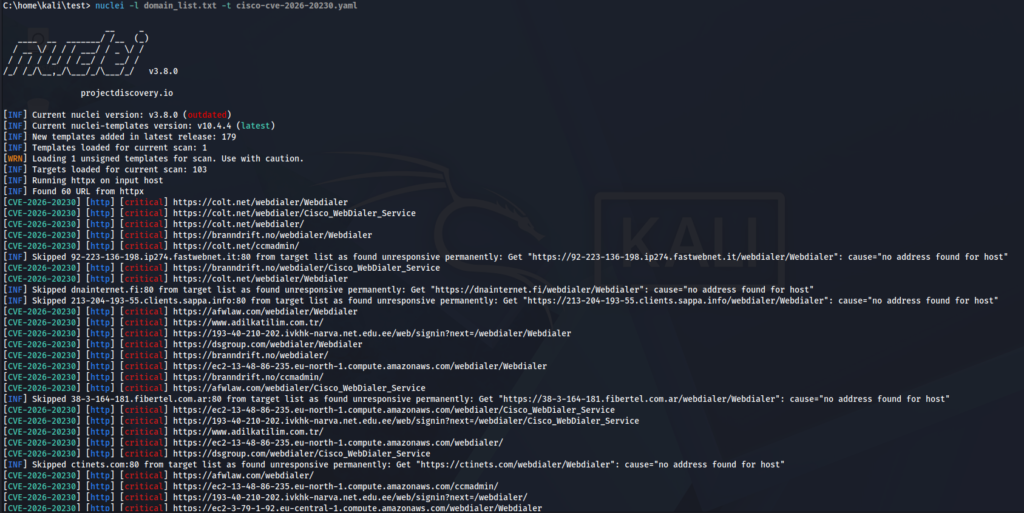
What are The Most Critical Security Vulnerabilities of June 2026
Among the hundreds of flaws logged as “actively exploited” or classified as highly severe by cybersecurity authorities and CISA during June 2026, the following 15 carried the most devastating potential impact across enterprise networks:
- CVE-2026-47291: Windows HTTP.sys Remote Code Execution (CVSS: 9.8) A wormable, unauthenticated remote code execution vulnerability discovered in the Windows kernel-mode driver responsible for parsing HTTP requests.
- CVE-2026-48567: Azure HorizonDB Privilege Escalation (CVSS: 10.0) A logical isolation flaw within Microsoft’s cloud database engine that allowed low-privileged users to gain full administrative rights across the entire cloud tenant.
- CVE-2026-48558: SimpleHelp RMM Authentication Bypass (CVSS: 10.0) An actively exploited vulnerability in remote monitoring and management software, resulting from a breakdown in the OpenID Connect (OIDC) validation chain that allowed attackers to completely bypass Multi-Factor Authentication (MFA).
- CVE-2026-44815: Windows DHCP Client Service RCE (CVSS: 9.8) An issue rooted in how the operating system processes DHCP reply packets when joining a network, enabling local network attackers to fully compromise targeted machines.
- CVE-2026-50751: Check Point Remote Access VPN Gateway Vulnerability (CVSS: 9.6) A critical security flaw impacting enterprise firewalls utilizing legacy IKEv1 configuration profiles, which permitted malicious actors to bypass local network security controls and gain unauthorized internal access.
- CVE-2026-25470: ACPT Pro WordPress Plugin Code Injection (CVSS: 10.0) A catastrophic remote code execution vulnerability found within the backend data-rendering architecture of a popular professional metadata plugin, allowing threat actors to drop web shells via unsanitized web hooks.
- CVE-2026-49160: HTTP/2 Protocol Control Frame DoS / “HTTP/2 Bomb” (CVSS: 7.5 – High Impact) A widely reported zero-day structural vulnerability affecting major web server binaries (NGINX, Apache) that enabled unauthenticated remote attackers to trigger severe memory exhaustion using single, highly compressed control frames.
- CVE-2026-39589: Webenvo Enterprise Suite Arbitrary File Upload (CVSS: 9.9) A structural flaw within an enterprise document-sharing workflow that failed to restrict binary formats, enabling attackers to upload and remotely execute malicious scripts within root application directories.
- CVE-2026-39502: 10Web Form Maker Unauthenticated SQL Injection (CVSS: 9.3) An input validation failure in a heavily deployed form automation engine, allowing blind SQL injection payloads to extract sensitive relational database schemas without user authentication.
- CVE-2026-55957: Apache Tomcat Default Constraint Logic Bypass (CVSS: 8.8) A flaw within Tomcat web containers where specialized URL character encoding patterns allowed external actors to circumvent restricted access control lists (ACLs) and read private configuration web resources.
- CVE-2026-10845: IBM WebSphere Application Server Authentication Bypass (CVSS: 9.8) A critical broken object-level authorization (BOLA) vulnerability that permitted an unauthenticated network entity to masquerade as administrative profiles during standard session renegotiations.
- CVE-2026-9258: Canon EOS Network Setting Tool Remote Code Execution (CVSS: 8.8) A memory buffer handling vulnerability in the desktop management software for professional camera fleets, which could be exploited remotely via intercepted local subnet broadcasts to run arbitrary code.
- CVE-2026-50507: Windows BitLocker Security Bypass (CVSS: 7.8 – High Impact) A localized physical access zero-day exploit that permitted malicious actors to interrupt the early pre-boot sequence and extract cryptographic master keys directly from the hardware Trusted Platform Module (TPM).
- CVE-2026-45657: Windows Kernel Elevation of Privilege (CVSS: 8.8) A vulnerability tied closely to the June 2026 Patch Tuesday cycle, where improper memory object mapping inside the core OS kernel granted local standard users absolute SYSTEM-level process generation capabilities.
- CVE-2026-14022: Cisco IOS XE Software Web UI Command Injection (CVSS: 9.8) An unauthenticated input sanitization vulnerability embedded within the management interface of enterprise routing platforms, enabling remote attackers to execute arbitrary commands directly on the underlying Linux subsystem.
Technical Detail: How the Vulnerability Works
A deep technical analysis of this month’s prominent vulnerabilities reveals how critical memory handling bugs, broken validation chains, and input sanitization failures during the software development phase can lead to catastrophic architectural outcomes:
- HTTP.sys (CVE-2026-47291) Mechanism: The
http.sysdriver running within the Windows kernel utilizes an integer variable to validate custom-configured header lengths in incoming HTTP/2 packets. An attacker can craft a malicious header designed to exceed memory boundaries and produce a negative value, triggering an Integer Overflow within the system. This discrepancy between the allocated memory space and the size of the copied data leads to a Buffer Overflow. Consequently, the threat actor can execute arbitrary malicious code at the highest operating system privilege tier—Kernel / SYSTEM level. - SimpleHelp RMM (CVE-2026-48558) Mechanism: This exploit leverages a flaw in the token validation process between the authentication server and the application, specifically targeting an inadequate check on the signature algorithm (
alg: "none"). By invalidating the algorithm segment within a JWT (JSON Web Token) header, an attacker injects a fabricated technician identity into the system. Because the backend code mistakenly accepts the unsigned token as valid, full access to the management console is granted without triggering the MFA phase. - Cisco IOS XE Web UI (CVE-2026-14022) Mechanism: This vulnerability stems from inadequate sanitization of user-supplied input fields inside HTTP requests handled by the device’s administrative web interface. The interface passes parameters directly into backend system shell execution layers without escaping special control characters. By appending shell metacharacters (such as
;or&&), an unauthenticated attacker commands the base OS interpreter to run arbitrary payloads with administrative root-level access on the underlying Linux subsystem. - Azure HorizonDB (CVE-2026-48567) Mechanism: The core issue involves a logical isolation failure inside the multi-tenant request-routing layer of the database platform. When processing high-performance transactional commands, the engine fails to adequately re-verify structural tenant tokens against the actual session state. An attacker can tamper with database parameter definitions inside an established session, dynamically swapping their tenant ID for a targeted victim’s ID. This causes the system to route commands across logical cross-tenant boundaries, leading to an immediate privilege escalation.
- 10Web Form Maker (CVE-2026-39502) Mechanism: This SQL Injection flaw exists because user inputs submitted through form fields are dynamically concatenated into a database query string rather than using parameterized queries. Since the web software relies on weak client-side validation rather than server-side sanitization, an attacker can input malformed SQL syntax. When processed by the relational database management system, this input tricks the application into executing arbitrary data definition statements, exposing private backend rows.
- HTTP/2 Bomb (CVE-2026-49160) Mechanism: This structural Denial of Service (DoS) attack capitalizes on an algorithmic complexity flaw within server-side HTTP/2 frame decompilers. A threat actor sends stream control frames containing highly optimized, nested compression matrices. When the server attempts to unpack and read these frames in memory, the expansion algorithm triggers a rapid, compounding resource loop. This forces CPU utilization to peak at 100% and completely exhausts the server’s memory buffer, rendering it unable to handle incoming legitimate requests.
Affected Software & Plugins
The vulnerability wave of June 2026 directly impacted both major operating systems and widely deployed web server and Content Management System (CMS) components:
| Software / Vendor | Affected Component / Version | Vulnerability Type | Required Action |
|---|---|---|---|
| Microsoft Windows | Windows Server 2019, 2022, 2025 and Windows 10/11 | Remote Code Execution (CVE-2026-47291) | Apply June 2026 Patch Tuesday Updates |
| Azure Cloud | HorizonDB Engine V3.2 and below | Privilege Escalation (CVE-2026-48567) | Automatically Patched by Cloud Vendor |
| SimpleHelp | RMM Server v5.4.1 and below | Authentication Bypass (CVE-2026-48558) | Upgrade to v5.4.2 or Higher |
| Apache Software | Tomcat 9.0.x, 10.1.x and HTTP Server | Use-After-Free / Privilege Abuse (CVE-2026-29167) | Transition to the Latest Stable Release |
| ACPT (WordPress) | ACPT Pro Plugin v1.0.8 and below | SQL & Code Injection (CVE-2026-25470) | Update or Disable the Plugin |
| Cisco Systems | IOS XE Software Web UI | Command Injection (CVE-2026-14022) | Install Latest Cisco IOS Software Patch |
| Check Point | Remote Access VPN Gateway (IKEv1 profiles) | Security Bypass (CVE-2026-50751) | Disable IKEv1 or Apply Firmware Hotfix |
| 10Web | Form Maker Plugin for WordPress v1.1.100 and below | Unauthenticated SQL Injection (CVE-2026-39502) | Update to Patch Release v1.1.101 |
| Webenvo | Enterprise Workflow Suite v4.2 | Arbitrary File Upload (CVE-2026-39589) | Restrict Binary Upload Formats via Update |
| NGINX / F5 | Core HTTP/2 Decompiler Layer | Resource Exhaustion DoS (CVE-2026-49160) | Update NGINX Binaries to Stable Branch |
| IBM | WebSphere Application Server v8.5 & v9.0 | Broken Object-Level Authorization (CVE-2026-10845) | Apply WebSphere Security Interim Fixes |
| Canon | EOS Network Setting Tool v2.1.0 and below | Subnet Buffer Handling RCE (CVE-2026-9258) | Deploy Version 2.2.0 Desktop Patch |
| Microsoft Windows | BitLocker Encryption / Boot Manager | Hardware TPM Key Extraction (CVE-2026-50507) | Install Secure Boot DBX Updates |
| Microsoft Windows | Core OS Kernel Mapping Layer | Local Privilege Escalation (CVE-2026-45657) | Apply June 2026 Cumulative Updates |
| Google Android | Android OS Framework Core (Versions 12, 13, 14, 15) | Privilege Elevation | Deploy June 5, 2026 Security Patch Level |
Conclusion
The June 2026 vulnerability landscape serves as a potent reminder that cybersecurity is a dynamic, continuous race rather than a static state. The rapid, in-the-wild exploitation of flaws rated CVSS 10.0 and 9.8 demonstrates that an organization’s Mean Time to Remediate (MTTR) has become a defining security metric. In an era where threat groups weaponize Proof-of-Concept (PoC) codes within hours of a vulnerability announcement, traditional patch cycles that rely on monthly or quarterly schedules are no longer sufficient to mitigate enterprise risk. Furthermore, the diversity of the vectors observed this month—spanning from deep Windows kernel overflows to cloud multi-tenant isolation failures and third-party CMS plugins—highlights the futility of relying solely on perimeter defenses. Security teams must shift their operational paradigms toward a robust Zero Trust framework where internal network boundaries are heavily guarded. Relying heavily on automated threat hunting, continuous asset discovery, and rapid security posture validation has transitioned from a best practice into an absolute necessity for safeguarding modern corporate environments.
To effectively protect underlying infrastructure moving forward, security teams must monitor vendor advisories in real-time, enforce strict network segmentation, and deploy June 2026 patches across all internet-facing systems without delay. Ultimately, building long-term cyber resilience against a relentless threat landscape demands a synchronized combination of proactive software development lifecycles, rigorous patch automation, and comprehensive visible telemetry across all enterprise endpoints.