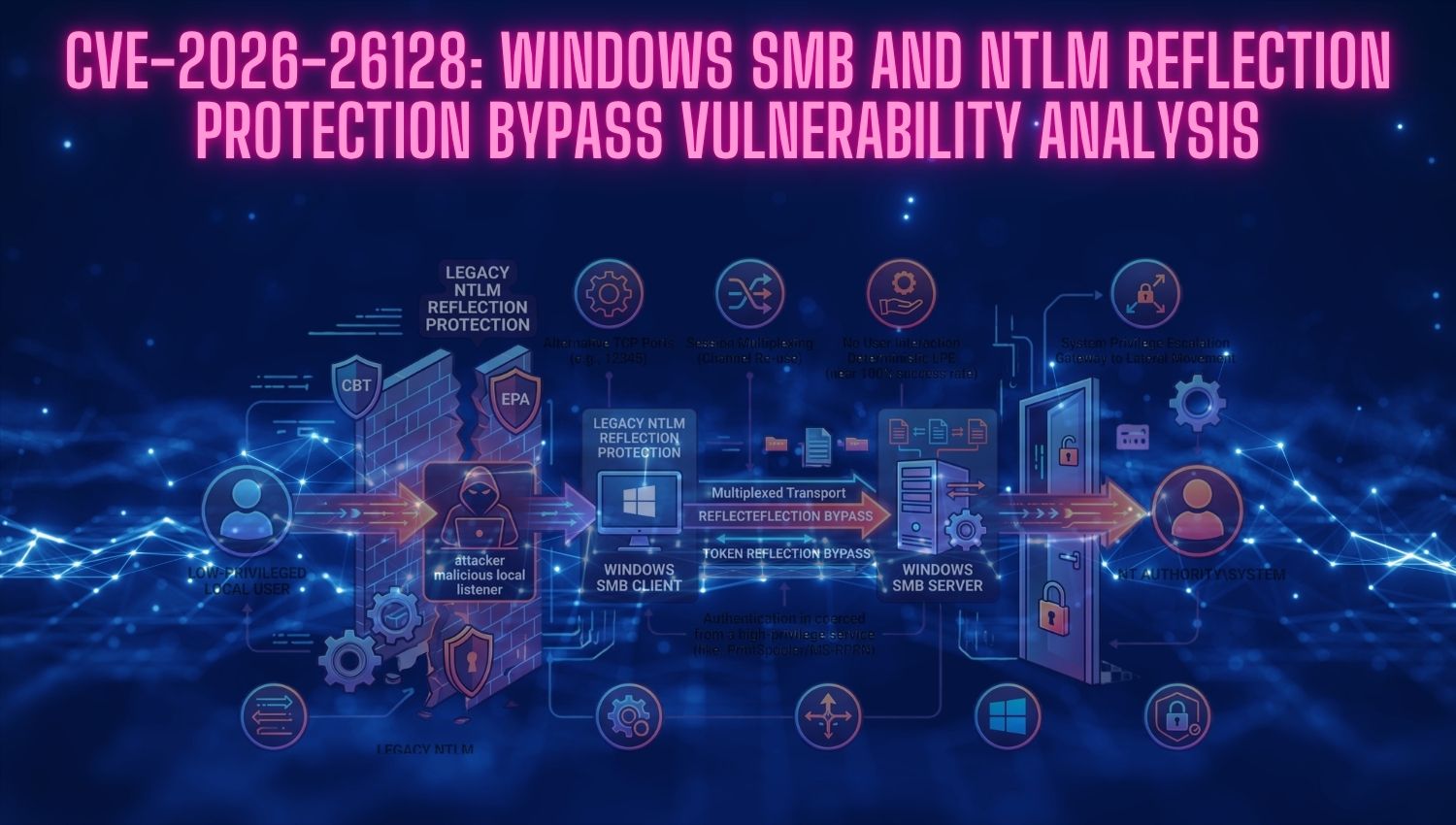
CVE-2026-26128: Windows SMB and NTLM Reflection Protection Bypass Vulnerability Analysis

CVE-2026-26128 WIndows SMB and NTLM ReflectIon ProtectIon Bypass VulnerabIlIty AnalysIs

Introduction The cybersecurity landscape is confronting a dangerous new threat targeting the core authentication mechanisms of Windows operating systems. With the public release of a Proof-of-Concept (PoC) exploit code, the vulnerability designated as CVE-2026-26128 introduces severe operational risks to local networks and systems. Although early reports incorrectly associated the flaw with the Kerberos protocol, technical analysis confirms that the underlying mechanism

Bad Epoll (CVE-2026-46242): The New Linux Kernel Threat That Outsmarted AI

Bad Epoll (CVE-2026-46242) The New LInux Kernel Threat That Outsmarted AI

Introduction For years, the cybersecurity industry has increasingly relied on automated code analysis and AI-driven vulnerability scanners to secure open-source software. However, the discovery of the “Bad Epoll” vulnerability (CVE-2026-46242) in May 2026 proved that even the most advanced AI models have their limitations. Found deep within the Linux kernel’s fundamental epoll I/O framework, this Local Privilege Escalation (LPE) flaw allows a low-privileged attacker to bypass critical security

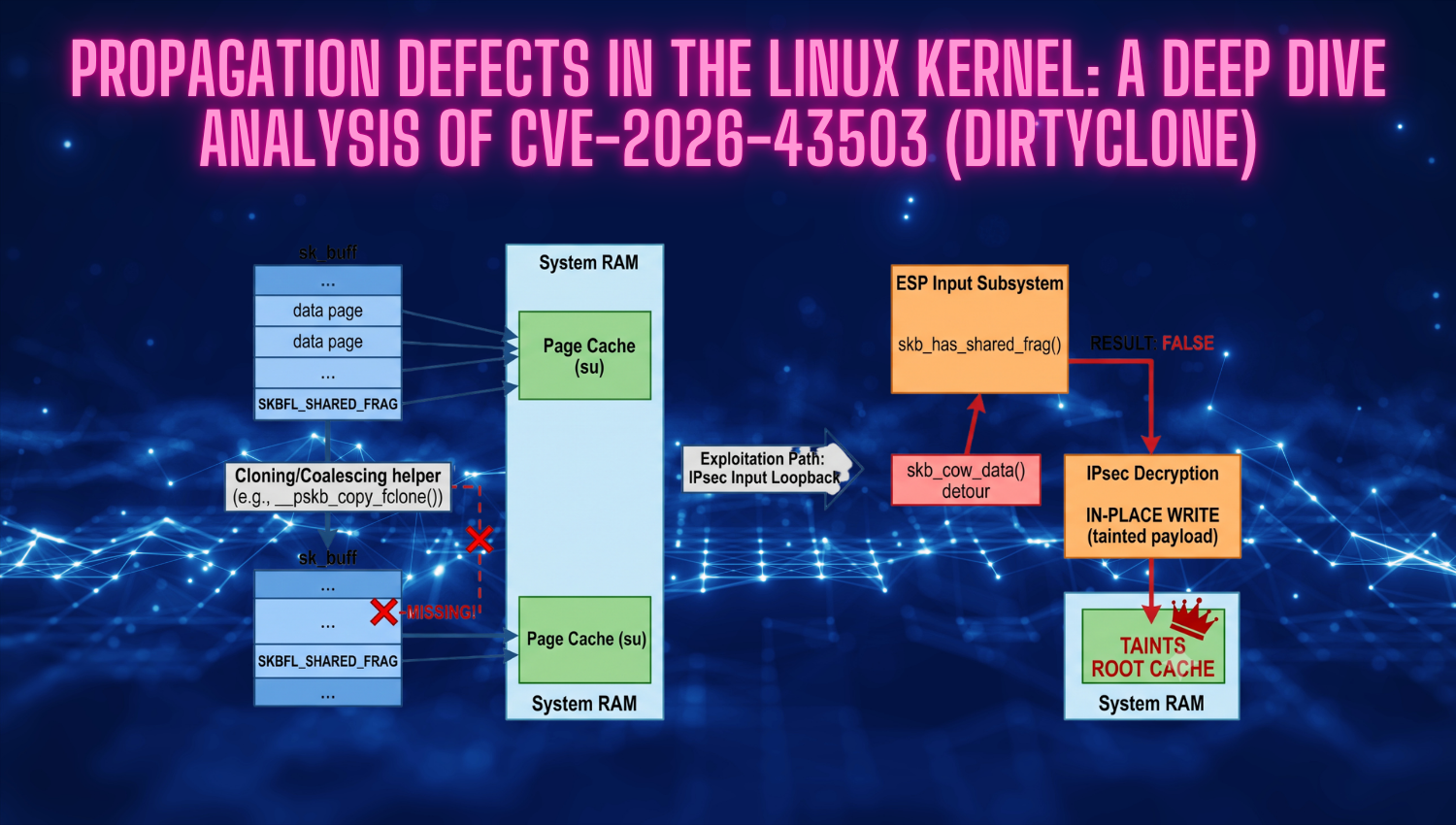
Propagation Defects in the Linux Kernel: A Deep Dive Analysis of CVE-2026-43503 (DirtyClone)

PropagatIon Defects In the LInux Kernel A Deep DIve AnalysIs of CVE-2026-43503 (DIrtyClone)

Introduction At the heart of modern operating systems, the Linux kernel relies heavily on advanced optimization techniques to maintain exceptional performance and throughput during memory management and network operations. One of the most fundamental of these architectural safeguards is the Copy-on-Write (COW) mechanism, which allows multiple unprivileged processes to share the exact same physical memory pages safely until an explicit

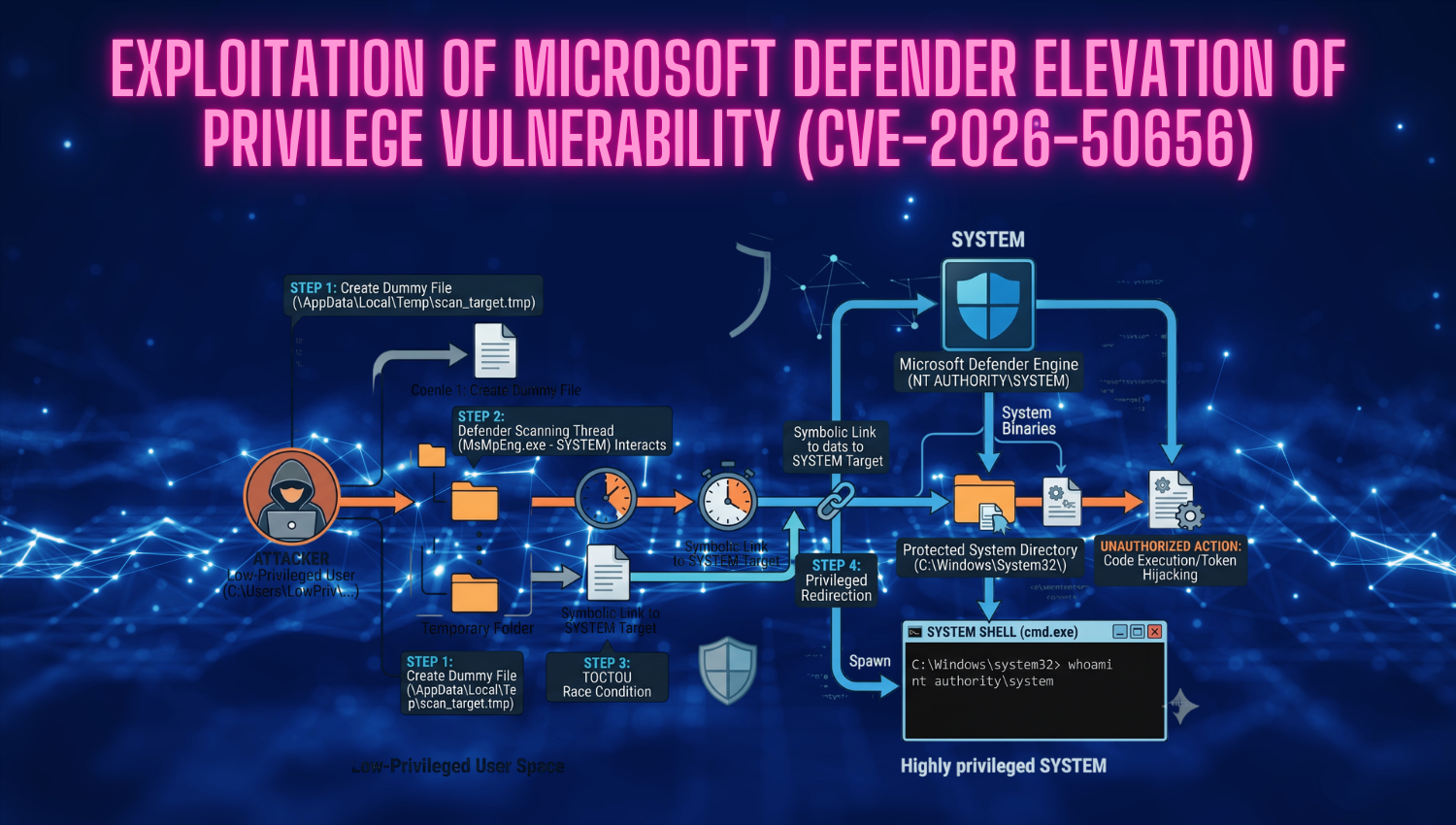
Exploitation of Microsoft Defender Elevation of Privilege Vulnerability (CVE-2026-50656)

Exploitation of Microsoft Defender Elevation of Privilege Vulnerability (CVE-2026-50656)

Introduction In modern operating systems, Endpoint Security components such as antivirus engines and EDR (Endpoint Detection and Response) agents operate close to the kernel layer to intercept malicious behavior. Within the Microsoft Windows ecosystem, Microsoft Defender serves as the native defense mechanism, inherently executing its tasks with the highest possible privilege level: NT AUTHORITY\SYSTEM. While this design is mandatory for system-wide remediation, any architectural or

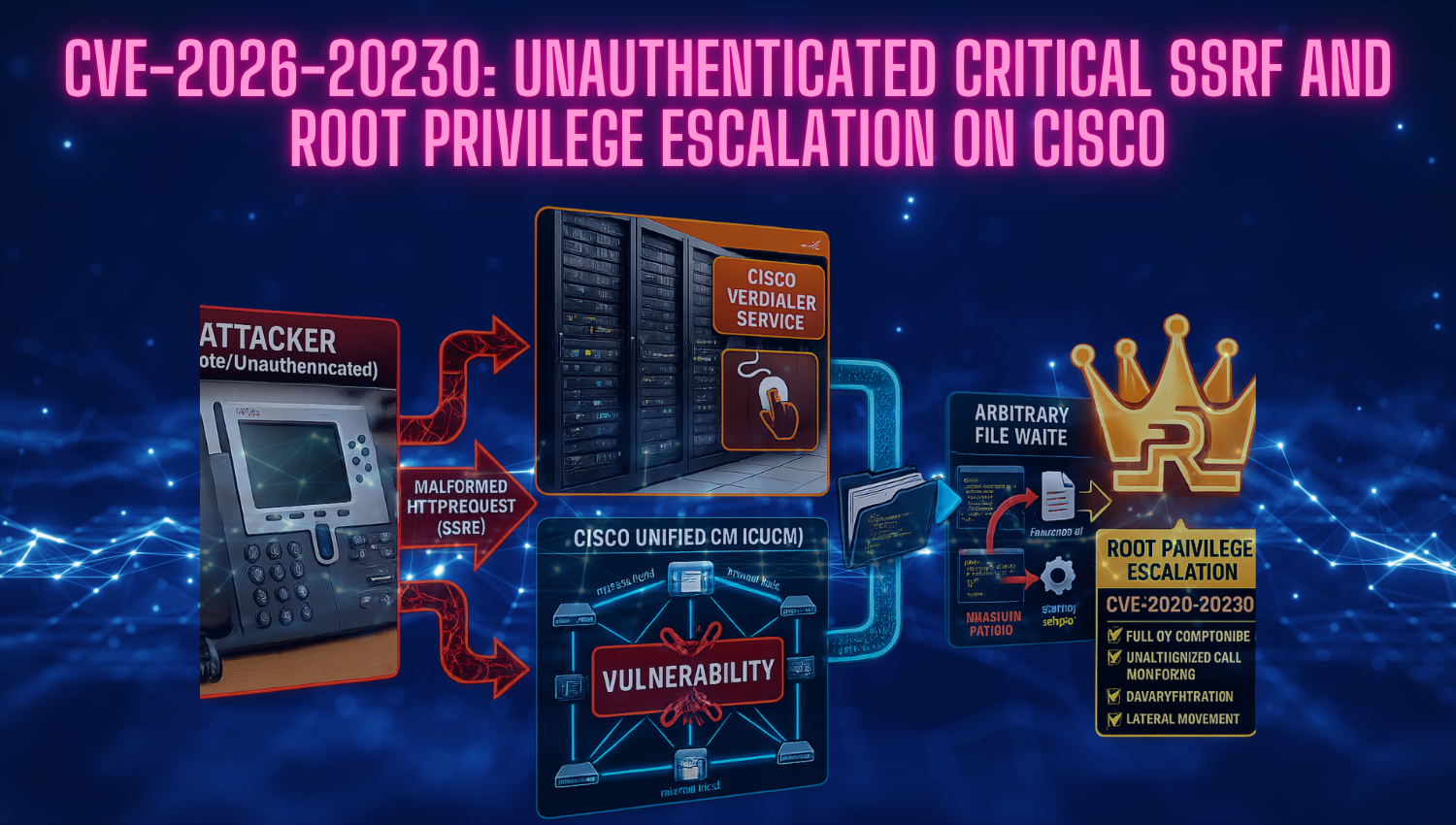
CVE-2026-20230: Unauthenticated Critical SSRF and Root Privilege Escalation on Cisco

Introduction Enterprise voice and video communication infrastructures rely heavily on Cisco Unified Communications Manager (Unified CM / CUCM) as a core asset within modern corporate network architectures. Because these unified communications platforms handle sensitive proprietary data, orchestrate internal routing, and connect disparate branch offices, they represent highly attractive targets for sophisticated threat actors looking to establish a persistent foothold. Disclosed by Cisco PSIRT in

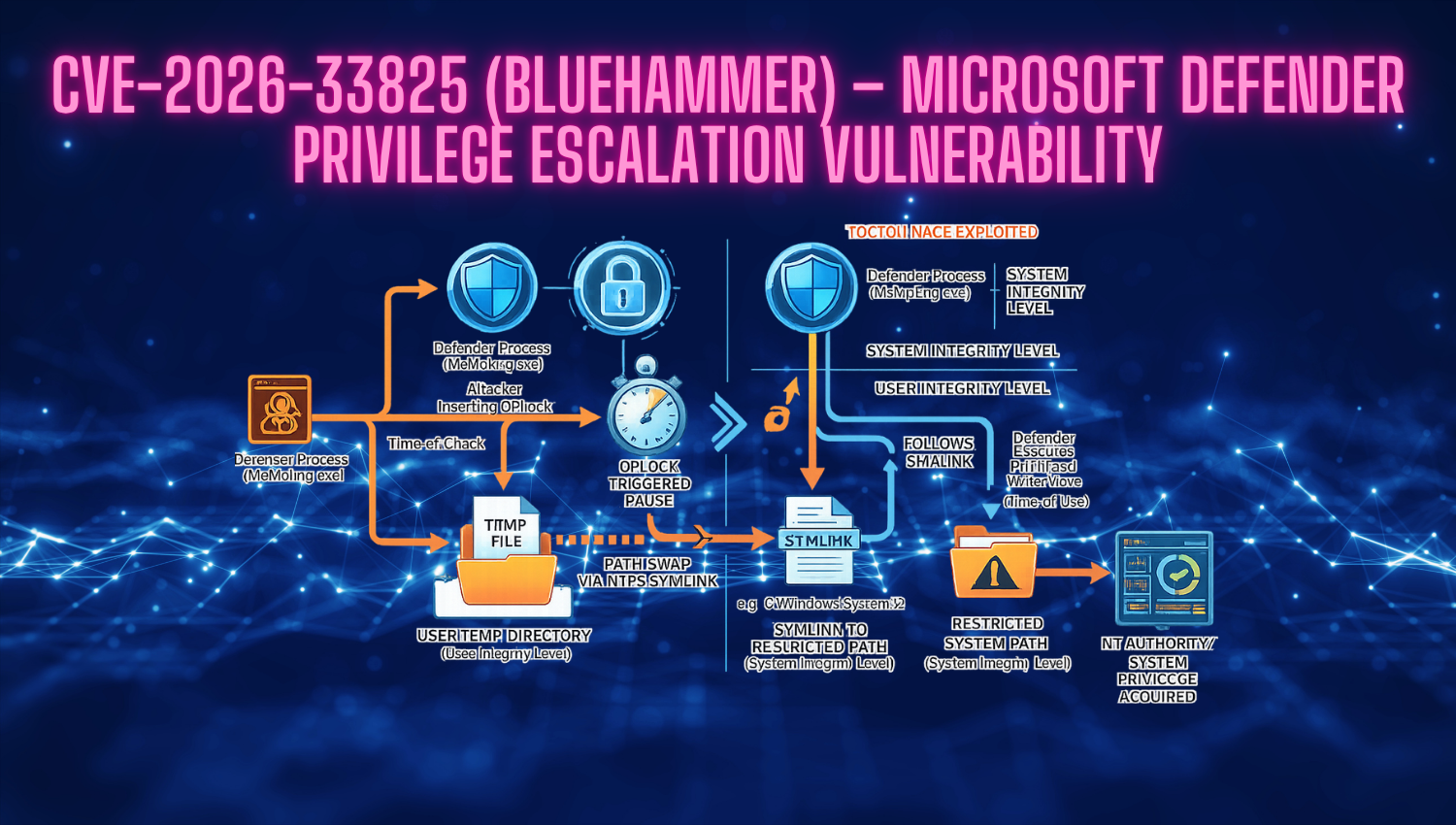
CVE-2026-33825 (BlueHammer) – Microsoft Defender Privilege Escalation Vulnerability

CVE-2026-33825 (BlueHammer) – MIcrosoft Defender PrIvIlege EscalatIon VulnerabIlIty

Introduction To achieve the highest level of privileges within an operating system, cyber threat actors frequently target the OS kernel or security software running with full system administrative rights. Discovered under the moniker “BlueHammer,” CVE-2026-33825 is a high-severity vulnerability that directly targets Windows’ native security mechanism, Microsoft Defender. Added by CISA to its Known Exploited Vulnerabilities (KEV) catalog due to evidence of active real-world exploitation, this

What is DCSync Attack and Mimikatz Usage in Active Directory

What is DCSync Attack and Mimikatz Usage in Active Directory

Introduction Active Directory (AD) serves as the backbone of enterprise IT infrastructure, managing user authentication, access control, and security policies across organizational networks. However, this critical infrastructure is frequently targeted by sophisticated attackers seeking to gain unauthorized access and maintain persistence within corporate environments. One of the most devastating attacks against Active Directory is the DCSync attack, a technique that leverages legitimate directory replication mechanisms

Thales: 1 Vulnhub Walkthrough

SImple CTF TryHackMe Walkthrough

Introduction Thales1 is a beginner-friendly Capture The Flag (CTF) challenge hosted on VulnHub, an open-source platform specifically designed to help cybersecurity enthusiasts gain practical, hands-on experience in penetration testing and vulnerability exploitation. Developed by MachineBoy, this virtual machine intentionally incorporates common security weaknesses found in real-world systems, making it an ideal learning tool for aspiring ethical hackers and security professionals. The environment is

DC-1 Capture The Flag Vulnhub Walkthrough

DC-1 Vulnhub Walkthrough

Introduction In the ever-evolving field of cybersecurity, hands-on experience is essential for developing the skills necessary to identify and mitigate vulnerabilities. Capture The Flag (CTF) challenges are a popular way for aspiring penetration testers to practice their skills in a controlled environment. One such challenge is the DC-1 CTF, hosted on VulnHub, which is designed specifically for beginners. The DC-1 CTF provides participants

OnSystemsHellDredd Offsec Walkthrough

OnSystemsHellDredd Offsec Walkthrough

Introduction OnSystemsHellDredd is a Capture The Flag (CTF) machine provided by Offensive Security. This machine contains various vulnerabilities that are ideal for penetration testing and security research. CTF events offer participants the opportunity to discover vulnerabilities they may encounter in real-world scenarios and exploit these vulnerabilities to gain access to systems. This OnSystemsHellDredd Offsec Walkthrough will detail the steps needed