Top 10 Add-ons for Burp Suite in Web Security

Top 10 Add ons for Burp SuIte In Web SecurIty

Introduction Web application security testing demands absolute precision, high operational speed, and granular visibility into non-standard protocols, modern API structures, and complex application logic. While Burp Suite (developed by PortSwigger) provides an industry-standard core engine for proxying traffic, its true power lies in its extensible architecture. By leveraging community-developed and commercial extensions, security researchers and penetration testers can seamlessly transform Burp Suite into a fully

The Ultimate Guide to 360 TryHackMe Free Rooms: Master Cybersecurity for Free

Remote Active Directory Pentesting A Comprehensive Overview

Introduction Starting a career in cybersecurity can feel like standing at the foot of an impossibly tall mountain. With endless sub-fields—ranging from web application security and digital forensics to reverse engineering, malware analysis, and cloud security—it is remarkably easy for beginners to feel overwhelmed about where to start, which path to follow, and what skills to prioritize. Fortunately, hands-on platforms like TryHackMe (THM) have

Responder Tool for Network Credential Capture in Active Directory

Responder Tool for Network Credential Capture in Active Directory

Introduction Responder is a powerful, open-source Python-based penetration testing tool that directly targets the fundamental weaknesses present in Windows network environments. By manipulating how machines resolve hostnames when DNS lookups fail, Responder intercepts broadcast name resolution requests—specifically those using LLMNR (Link-Local Multicast Name Resolution), NBT-NS (NetBIOS Name Service), and MDNS (Multicast DNS) protocols—and impersonates legitimate network resources. This approach lets attackers seamlessly perform man-in-the-middle (MITM) attacks: when victims

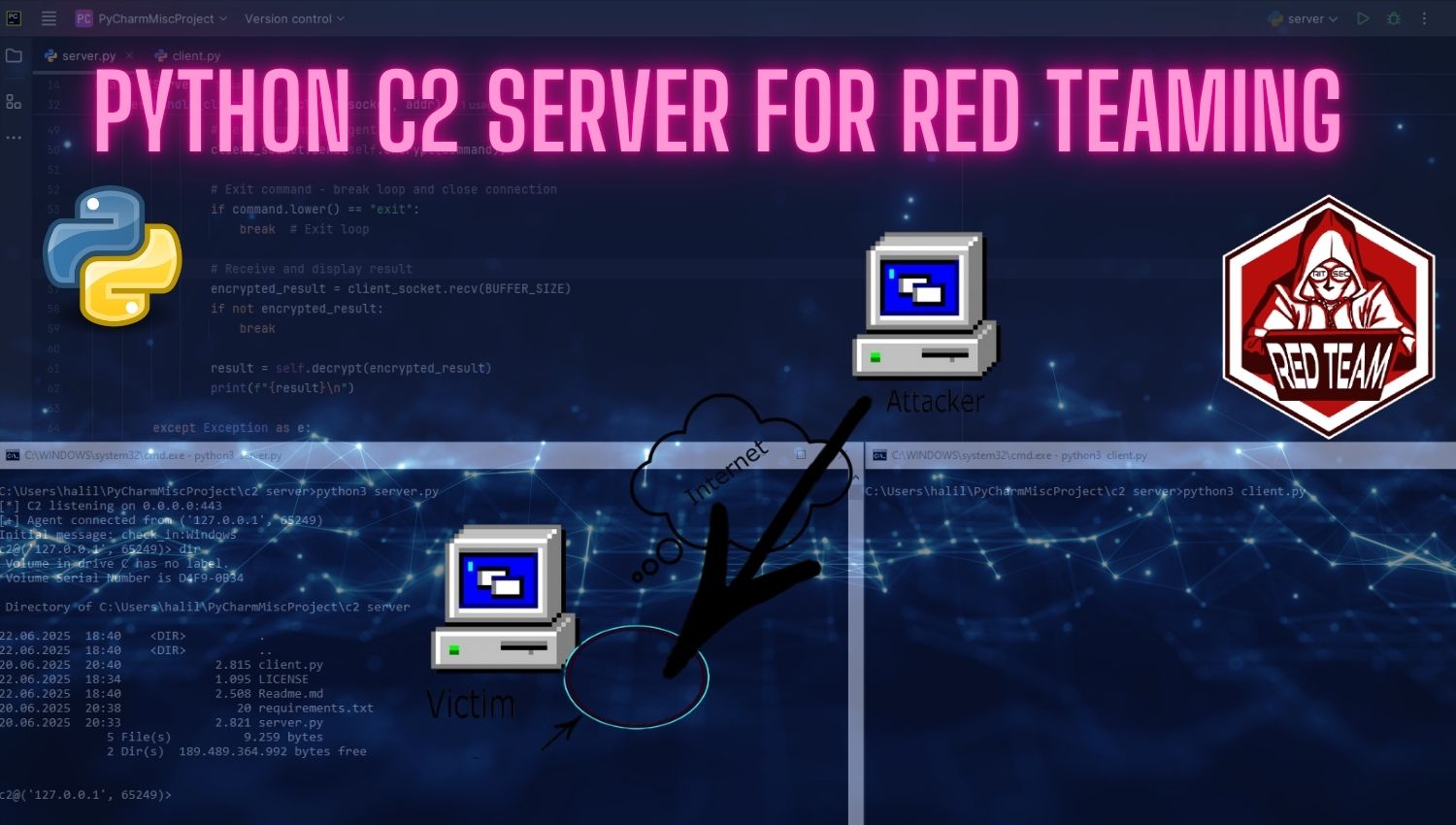
Python C2 Server for Red Teaming: A Comprehensive Hands-On Guide

Python C2 Server for Red Teamingjpg

Introduction In the evolving landscape of cybersecurity, Red Team operations have become essential for organizations seeking to assess their defensive capabilities against sophisticated threats. At the heart of these operations lies the Command & Control (C2) infrastructure, a critical component that enables security professionals to simulate adversarial tactics, techniques, and procedures in controlled environments. The Python-C2-Server-for-Red-Teaming project represents an accessible, open-source solution designed specifically for authorized

Automatically Generated Malware with AI: Misuse of Artificial Intelligence

AutomatIcally Generated Malware wIth AI MIsuse of ArtIfIcIal IntellIgence

Introduction In recent years, artificial intelligence (AI) has introduced innovations that could fundamentally shake the cybersecurity world, while simultaneously giving rise to new and highly adaptive threats. Moving beyond classical malware development methods, automated and far more sophisticated malicious software systems powered by AI have provided threat actors with powerful tools to automate attacks, evolve malware code, and bypass traditional security barriers. The capabilities

Spoofing Packets with Scapy: A Comprehensive Guide

SpoofIng Packets wIth Scapy A ComprehensIve Guide

Introduction In the world of network security, understanding how data packets traverse through networks is crucial. One of the most powerful tools available for packet manipulation is Scapy, a Python-based interactive packet manipulation program. Scapy allows users to create, send, and analyze network packets, making it an essential tool for network engineers, security professionals, and researchers. This guide will delve into the process of sending

Linux Privilege Escalation Cheat Sheet: Techniques and Prevention

LInux PrIvIlege EscalatIon Cheat Sheet TechnIques and PreventIon

Introduction Linux privilege escalation is a critical security concern that involves exploiting vulnerabilities to gain unauthorized access to system resources. This technique is commonly used by attackers to elevate their privileges from a limited user account to the root user, allowing them full control over the system. The root user has unrestricted access, enabling them to modify system configurations, install

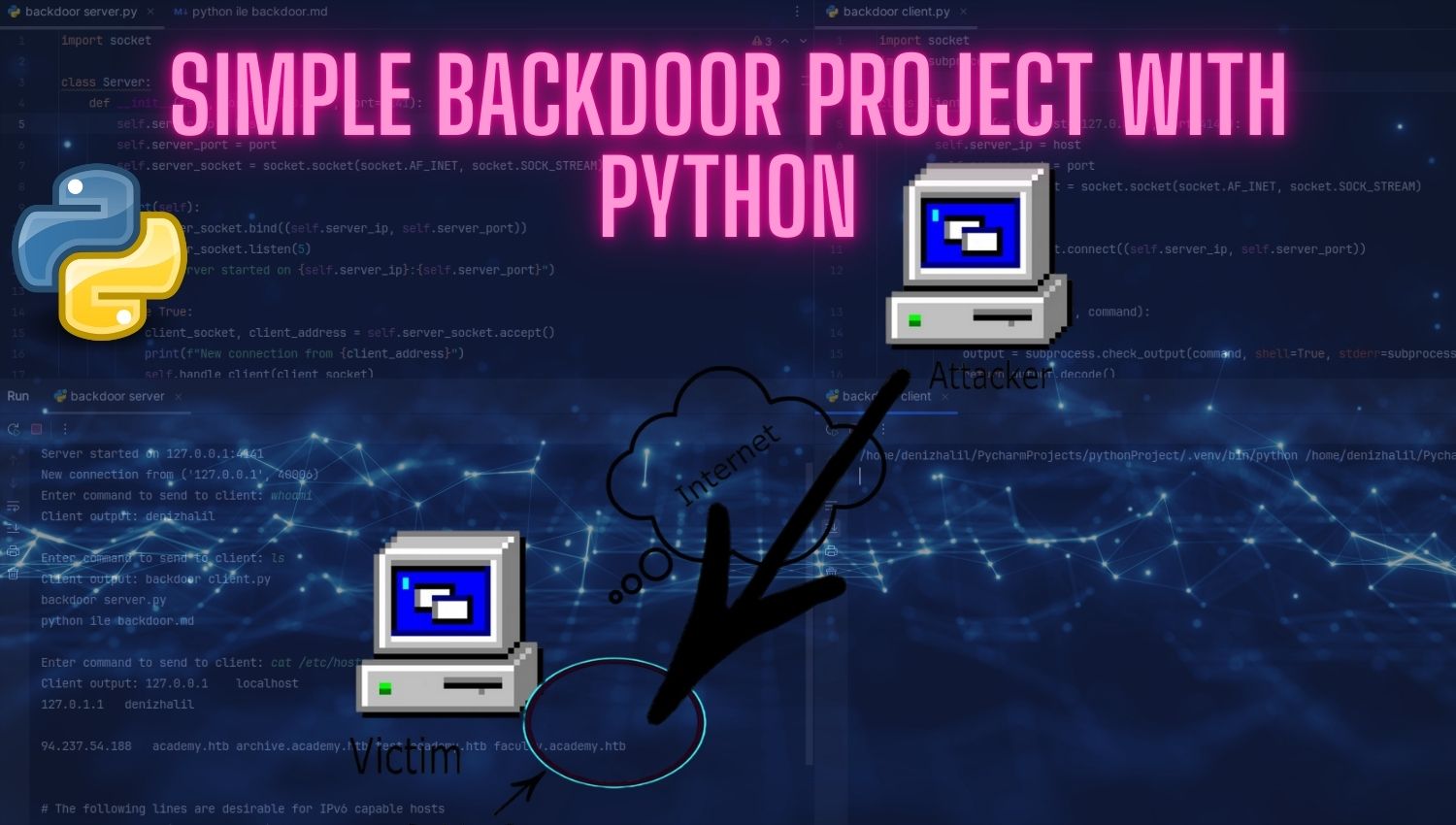
Simple Backdoor Project with Python

SImple Backdoor Project wIth Python

Introduction In the realm of cybersecurity, understanding how backdoors function is crucial for both offensive and defensive strategies. A backdoor is a method of bypassing normal authentication or encryption in a computer system, allowing unauthorized access to data or systems. These covert pathways can be exploited by malicious actors to gain control over a system without detection, leading to significant

Thales: 1 Vulnhub Walkthrough

SImple CTF TryHackMe Walkthrough

Introduction Thales1 is a beginner-friendly Capture The Flag (CTF) challenge hosted on VulnHub, an open-source platform specifically designed to help cybersecurity enthusiasts gain practical, hands-on experience in penetration testing and vulnerability exploitation. Developed by MachineBoy, this virtual machine intentionally incorporates common security weaknesses found in real-world systems, making it an ideal learning tool for aspiring ethical hackers and security professionals. The environment is

Network Monitoring with Termux: Practical Approaches to Mobile Security

Fast Network Monitoring with Termux

Introduction In today’s mobile-driven world, the ability to monitor and analyze network traffic directly from your Android device offers a significant advantage for both professionals and enthusiasts. Termux, a powerful terminal emulator for Android, transforms your smartphone into a portable network diagnostics and security toolkit. With Termux, you can access a wide range of advanced Linux-based networking tools on the go—allowing