Certighost (CVE-2026-54121): How Low-Privilege Users Impersonate Domain Controllers
Certighost (CVE-2026-54121) How Low-Privilege Users Impersonate Domain Controllers

Introduction Active Directory Certificate Services (AD CS) serves as a foundational component in modern enterprise identity environments, facilitating public key infrastructure (PKI), machine authentication, VPN access, and smart card logins. However, misconfigurations and deep-seated flaws in how Enterprise Certificate Authorities (CAs) process incoming certificate requests or resolve directory objects can create severe privilege escalation vectors. The Certighost vulnerability (CVE-2026-54121) exposes a critical breakdown in this identity trust boundary, allowing an
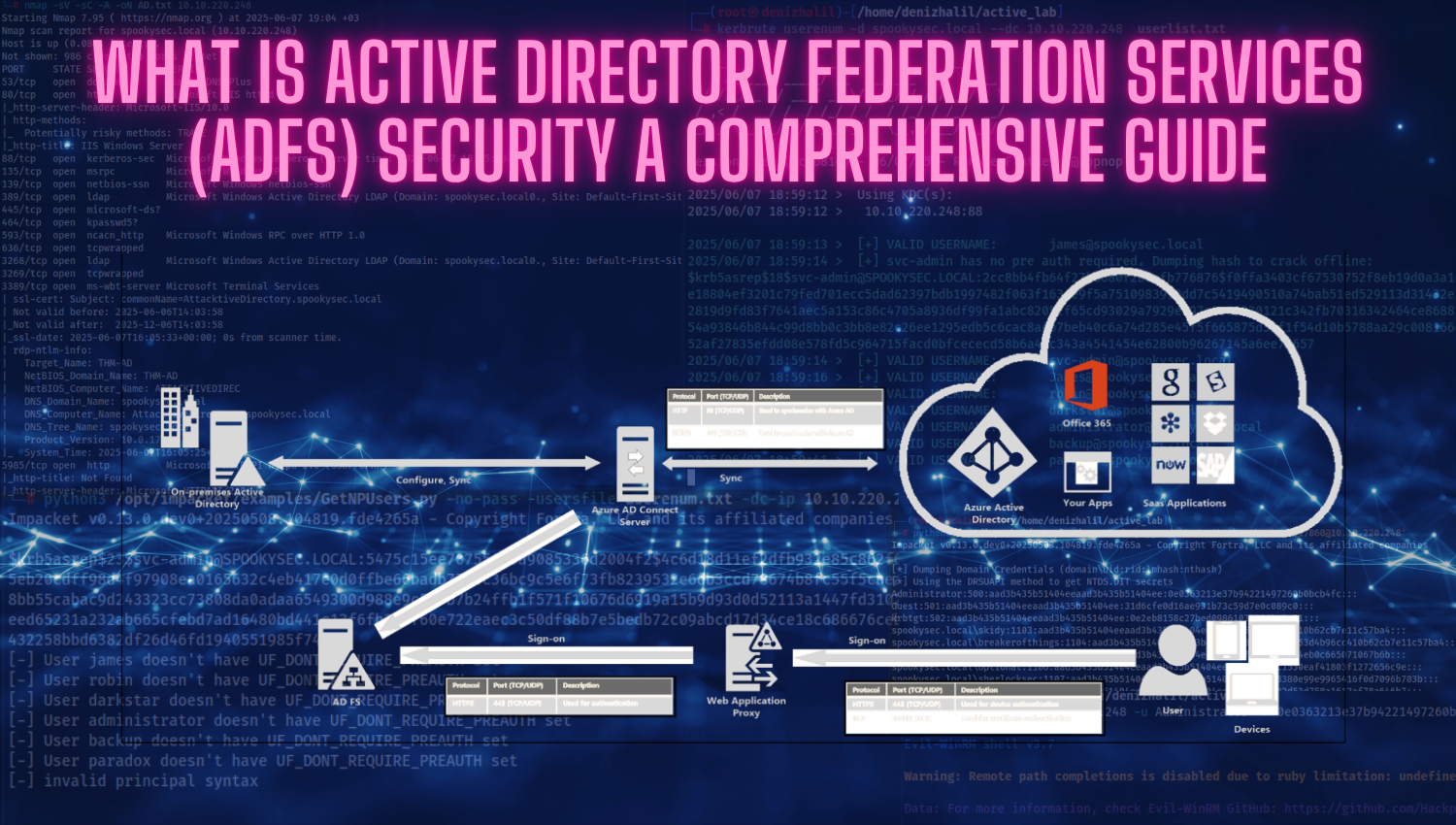
What is Active Directory Federation Services (ADFS) Security

What is Active Directory Federation Services

Introduction Active Directory Federation Services (ADFS) is a foundational Microsoft technology offering secure single sign-on (SSO) and federated identity management across diverse environments. In today’s enterprise landscape, organizations routinely combine on-premises systems, cloud applications, third-party SaaS solutions, and even business partner resources—making complex identity challenges inevitable. ADFS addresses these challenges by allowing employees and partners to access multiple applications and services, both inside and outside the

What is Silver Ticket Attack: A Comprehensive Guide

What is Silver Ticket Attack: A Comprehensive Guide

Introduction A Silver Ticket attack is a stealthy Kerberos exploitation technique that allows attackers to access specific network services in an Active Directory environment by forging service tickets. Unlike Golden Tickets, which provide domain-wide access by compromising the KRBTGT account, Silver Tickets exploit individual service account credentials to impersonate authorized users for targeted resources. These attacks bypass the domain

Responder Tool for Network Credential Capture in Active Directory

Responder Tool for Network Credential Capture in Active Directory

Introduction Responder is a powerful, open-source Python-based penetration testing tool that directly targets the fundamental weaknesses present in Windows network environments. By manipulating how machines resolve hostnames when DNS lookups fail, Responder intercepts broadcast name resolution requests—specifically those using LLMNR (Link-Local Multicast Name Resolution), NBT-NS (NetBIOS Name Service), and MDNS (Multicast DNS) protocols—and impersonates legitimate network resources. This approach lets attackers seamlessly perform man-in-the-middle (MITM) attacks: when victims

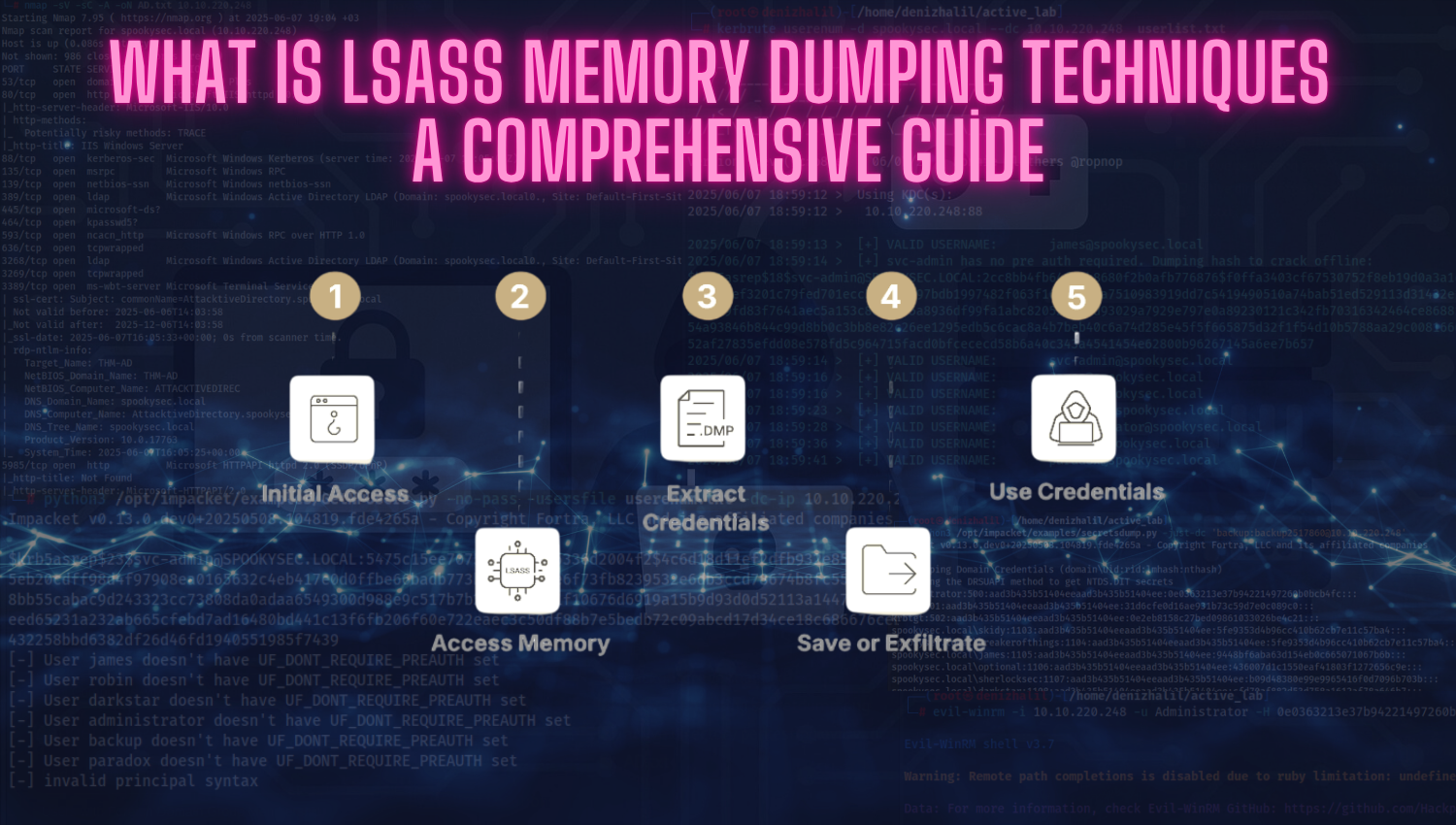
What is LSASS Memory Dumping Techniques: A Comprehensive Guide

What is LSASS Memory Dumping Techniques A Comprehensive Guide

Introduction As cyber threats continuously evolve and become increasingly sophisticated, attackers persistently target critical system processes to extract valuable credentials and maintain persistent access within compromised environments. One of the most targeted components on Windows systems is the Local Security Authority Subsystem Service, better known as LSASS. This core Windows process is responsible for managing user authentication, enforcing security policies, and

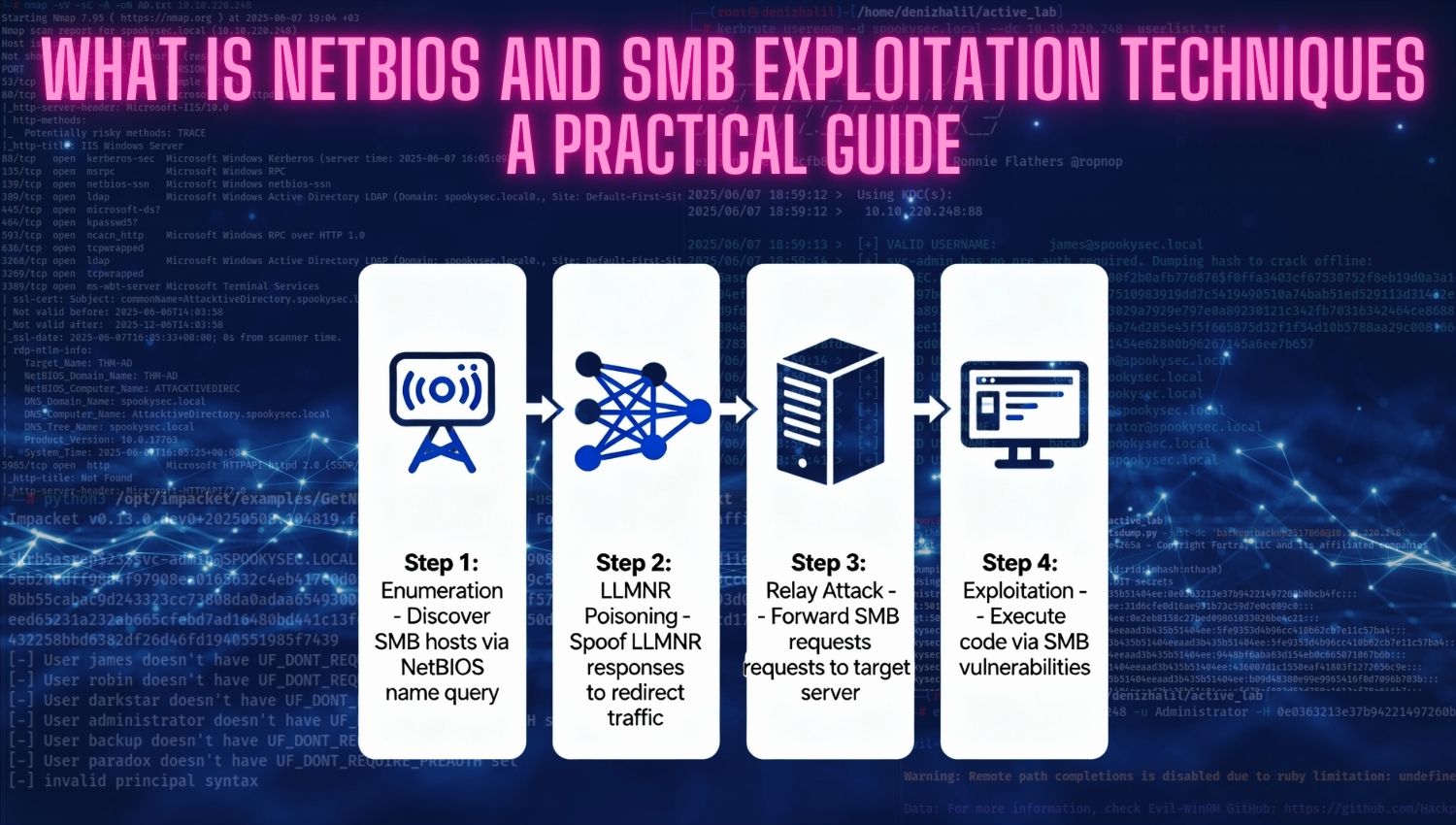
What is NetBIOS and SMB Exploitation Techniques: A Practical Guide

What is NetBIOS and SMB Exploitation Techniques

Introduction NetBIOS (Network Basic Input/Output System) and SMB (Server Message Block) are fundamental protocols that form the backbone of modern Windows networking environments. These protocols enable critical network functions including file sharing, printer access, and inter-process communication across enterprise systems. However, their widespread deployment and legacy compatibility features have made them frequent targets for attackers seeking unauthorized network access. Understanding how these protocols work, their inherent

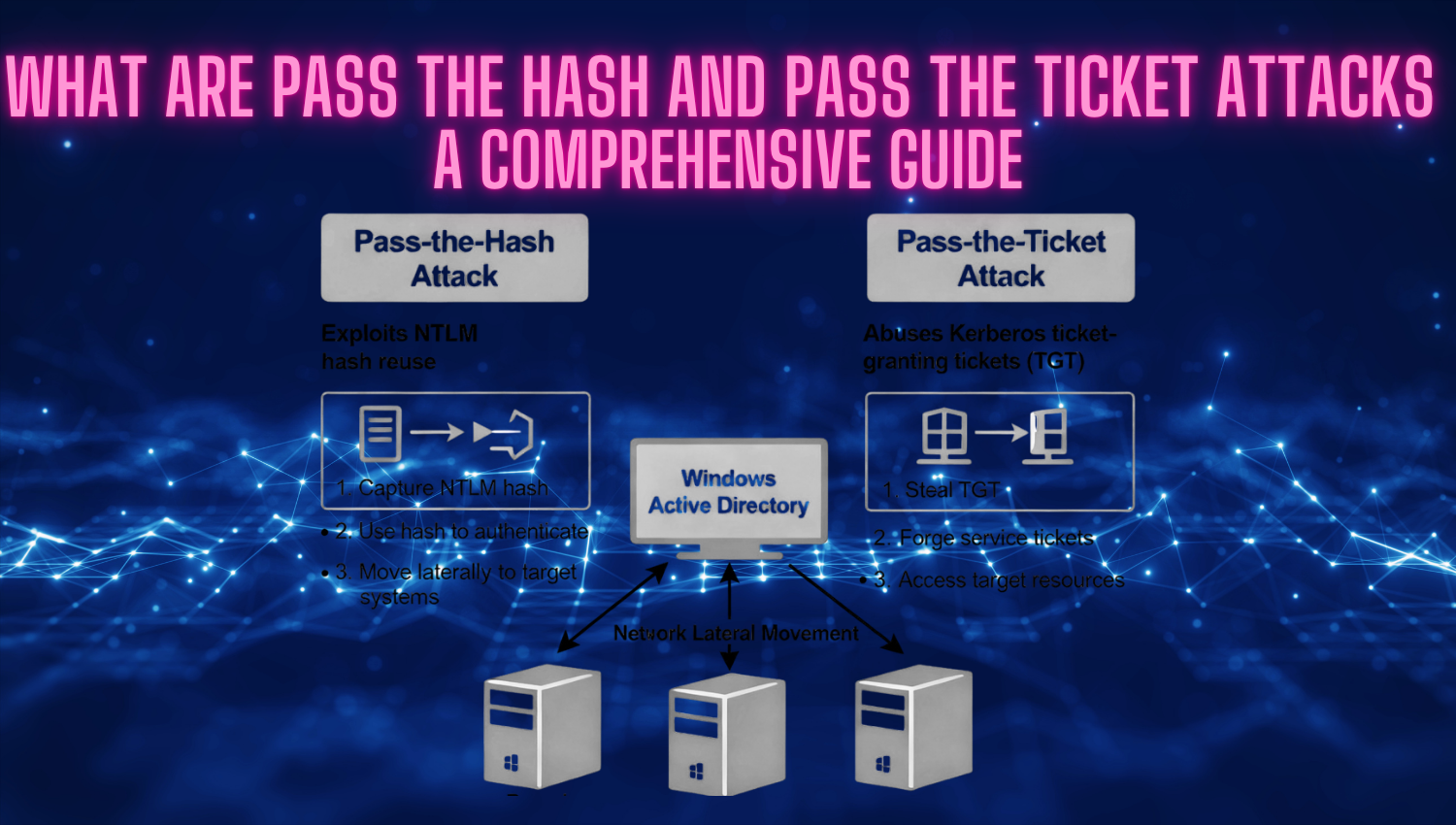
What are Pass-the-Hash and Pass-the-Ticket Attacks: A Comprehensive Guide

What are Pass-the-Hash and Pass-the-Ticket Attacks A Comprehensive Guide

Introduction In contemporary cybersecurity, attackers continuously evolve their methods, moving beyond conventional password cracking and brute-force attacks to exploit the deeper weaknesses in authentication systems. Among the most serious threats to enterprise networks are Pass-the-Hash (PtH) and Pass-the-Ticket (PtT) attacks, which allow attackers to leverage stolen authentication material directly—whether in the form of hashed passwords or Kerberos tickets—without ever needing to obtain plaintext

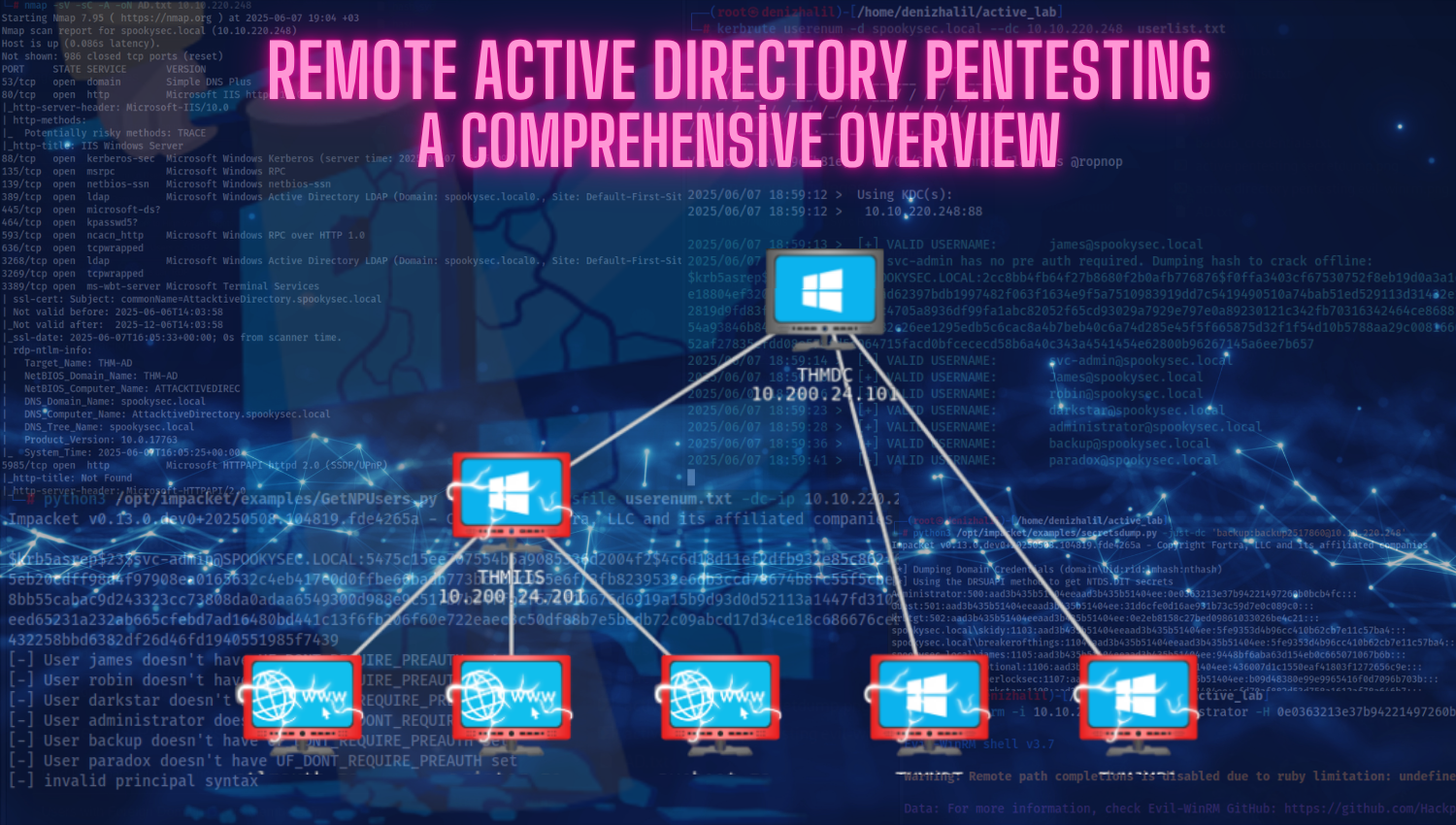
Remote Active Directory Pentesting: A Comprehensive Overview

Remote Active Directory Pentesting A Comprehensive Overview

Introduction Active Directory (AD) serves as the central nervous system for identity and access management in enterprise environments, governing user authentication, resource permissions, and group policies across networks. Despite its critical role, AD environments are frequent targets for attackers due to inherent complexities and common misconfigurations—such as overly permissive access controls, legacy protocol support (e.g., NTLMv1), and unpatched vulnerabilities. Remote Active Directory pentesting simulates adversarial tactics to

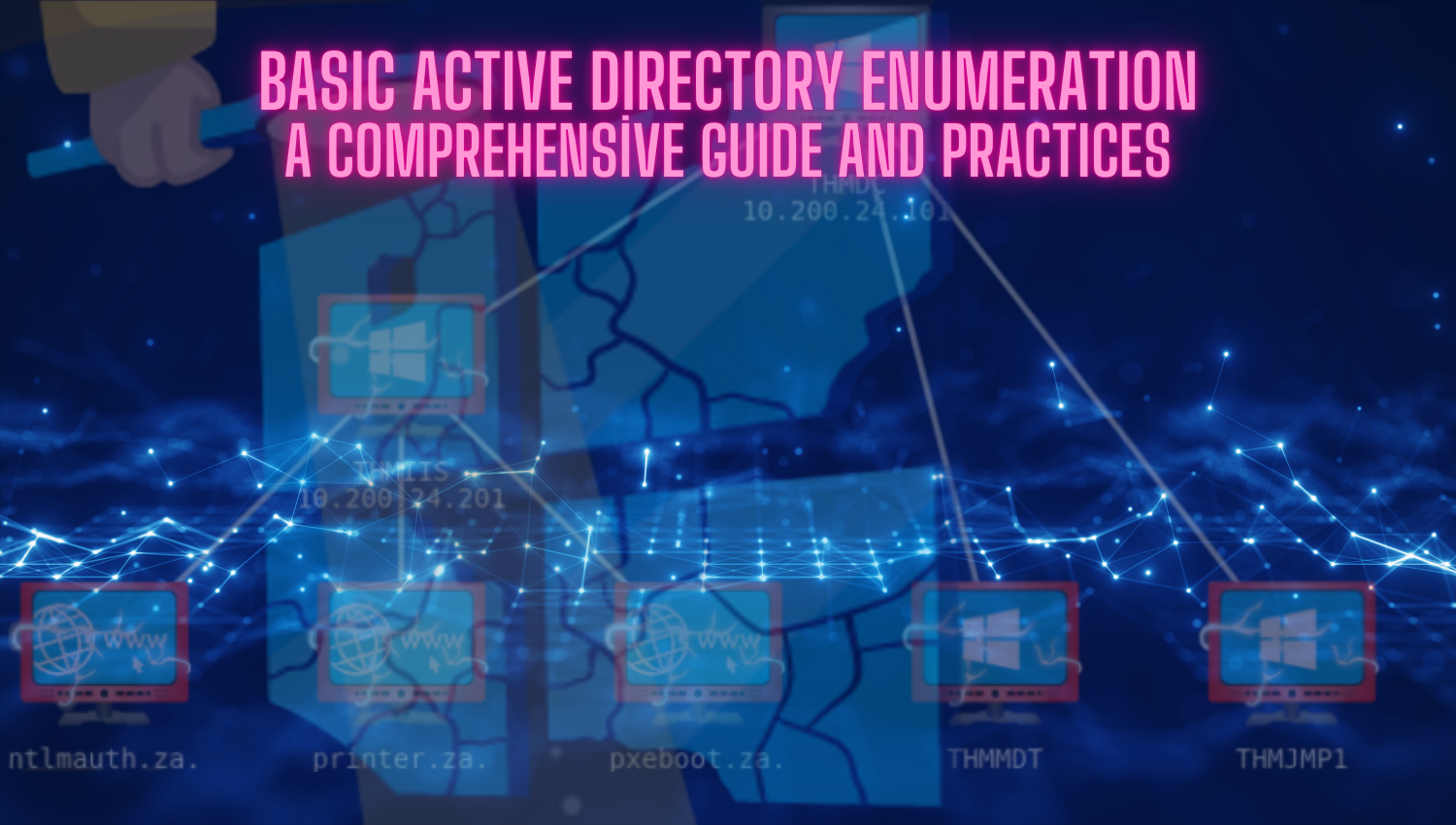
Basic Active Directory Enumeration: A Comprehensive Guide

Basic Active Directory Enumeration A Comprehensive Guide

Introduction Active Directory (AD) is a core component of Windows network management, allowing administrators to efficiently manage users, groups, and resources. As a central directory service, AD facilitates authentication and authorization, vital for security and policy enforcement. Understanding Active Directory enumeration is crucial for security professionals. Enumeration involves extracting detailed information like user accounts and group memberships, which helps identify potential vulnerabilities and misconfigurations. This article explores

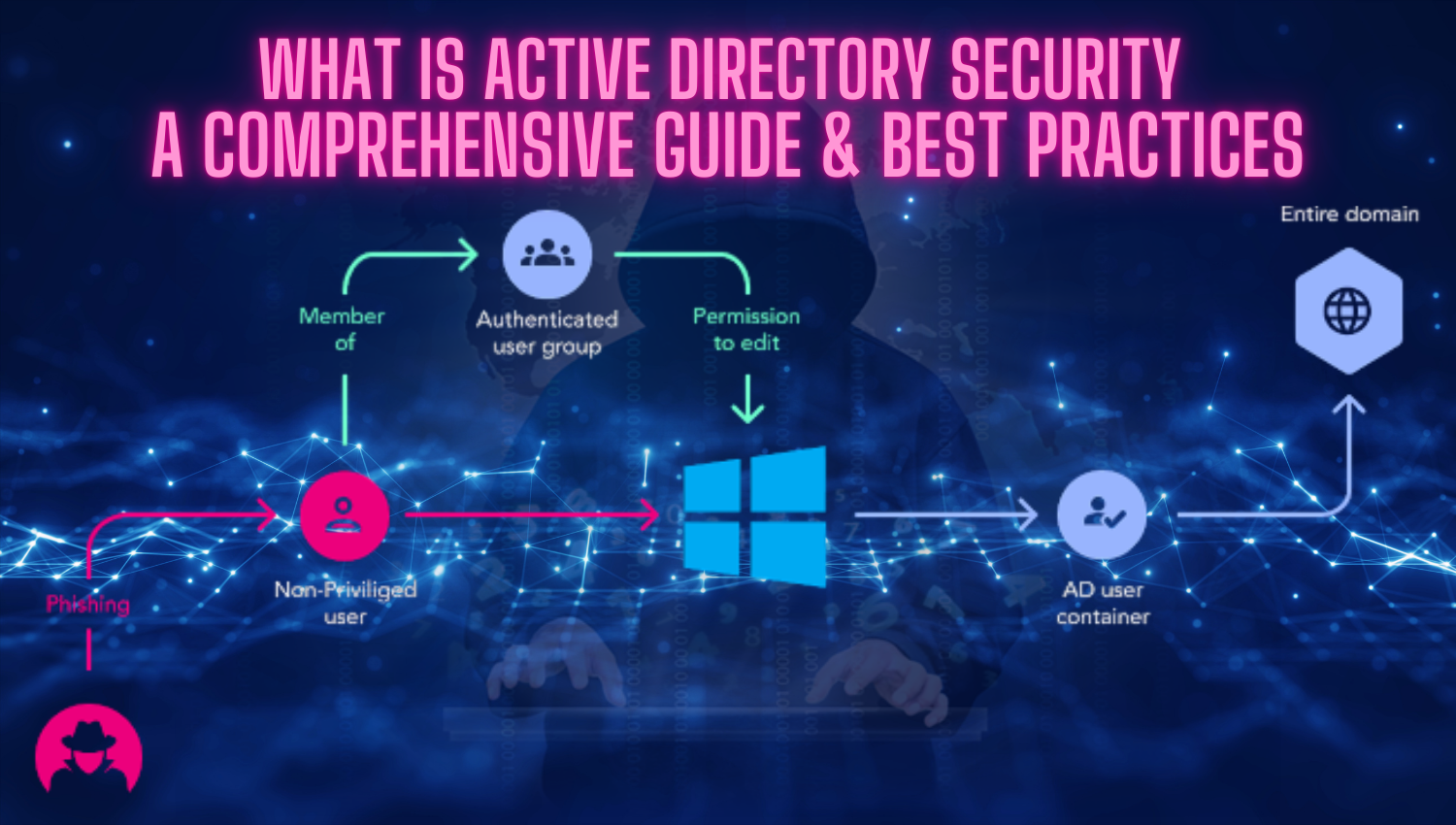
What is Active Directory Security: A Comprehensive Guide

What is active directory security

Introduction Active Directory (AD) is a directory service developed by Microsoft for Windows environments, playing a crucial role in managing users, computers, and network resources. Since its launch with Windows 2000, AD has become essential for organizations of all sizes, providing functionalities such as authentication, authorization, and centralized management of access and policies. One of the key benefits of Active Directory is its ability to streamline