Microsoft Defender Elevation of Privilege Vulnerability: CVE-2026-50656

MIcrosoft Defender ElevatIon of PrIvIlege VulnerabIlIty CVE-2026-50656

Introduction In modern operating systems, antivirus and protection engines form the most critical layer of system security. However, by design, these software components must operate with the highest possible system privileges (NT AUTHORITY\SYSTEM). This fundamental necessity turns security engines into a primary and highly lucrative target for cyber adversaries. The local elevation of privilege (EoP) vulnerability identified within Microsoft Defender, publicly dubbed “RoguePlanet” and tracked as CVE-2026-50656, directly
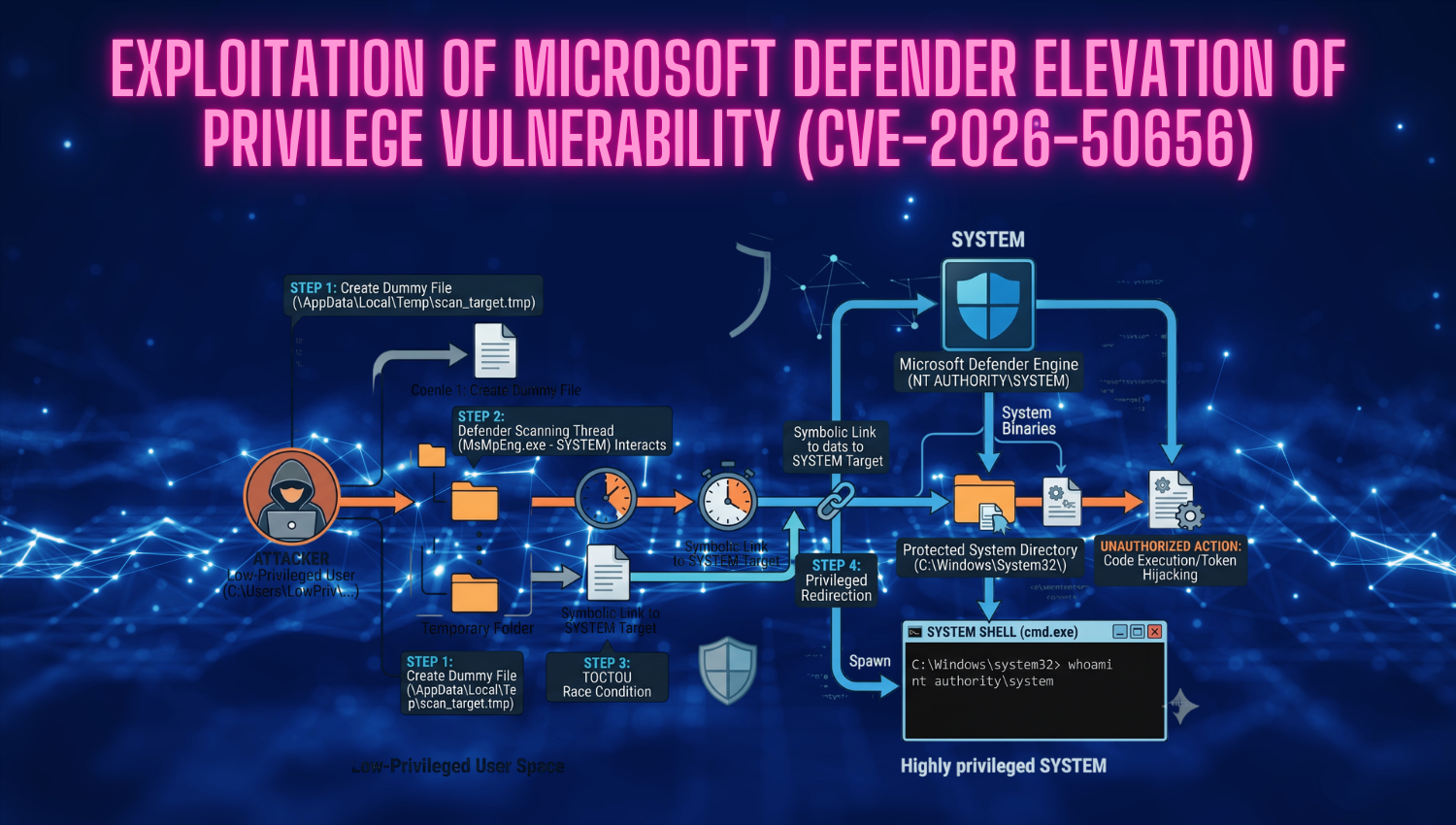
Exploitation of Microsoft Defender Elevation of Privilege Vulnerability (CVE-2026-50656)

Exploitation of Microsoft Defender Elevation of Privilege Vulnerability (CVE-2026-50656)

Introduction In modern operating systems, Endpoint Security components such as antivirus engines and EDR (Endpoint Detection and Response) agents operate close to the kernel layer to intercept malicious behavior. Within the Microsoft Windows ecosystem, Microsoft Defender serves as the native defense mechanism, inherently executing its tasks with the highest possible privilege level: NT AUTHORITY\SYSTEM. While this design is mandatory for system-wide remediation, any architectural or

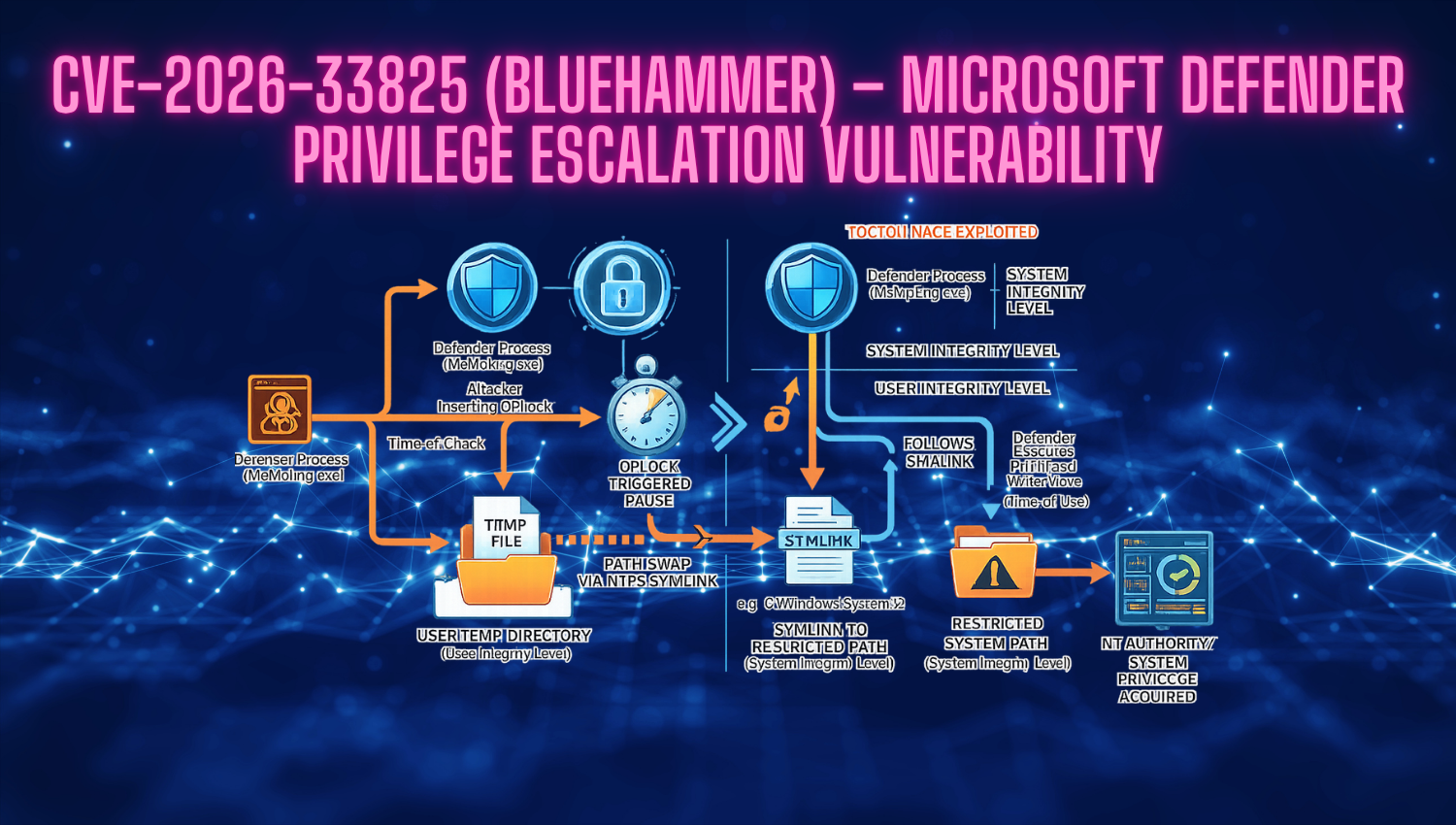
CVE-2026-33825 (BlueHammer) – Microsoft Defender Privilege Escalation Vulnerability

CVE-2026-33825 (BlueHammer) – MIcrosoft Defender PrIvIlege EscalatIon VulnerabIlIty

Introduction To achieve the highest level of privileges within an operating system, cyber threat actors frequently target the OS kernel or security software running with full system administrative rights. Discovered under the moniker “BlueHammer,” CVE-2026-33825 is a high-severity vulnerability that directly targets Windows’ native security mechanism, Microsoft Defender. Added by CISA to its Known Exploited Vulnerabilities (KEV) catalog due to evidence of active real-world exploitation, this