Certighost (CVE-2026-54121): How Low-Privilege Users Impersonate Domain Controllers
Certighost (CVE-2026-54121) How Low-Privilege Users Impersonate Domain Controllers

Introduction Active Directory Certificate Services (AD CS) serves as a foundational component in modern enterprise identity environments, facilitating public key infrastructure (PKI), machine authentication, VPN access, and smart card logins. However, misconfigurations and deep-seated flaws in how Enterprise Certificate Authorities (CAs) process incoming certificate requests or resolve directory objects can create severe privilege escalation vectors. The Certighost vulnerability (CVE-2026-54121) exposes a critical breakdown in this identity trust boundary, allowing an
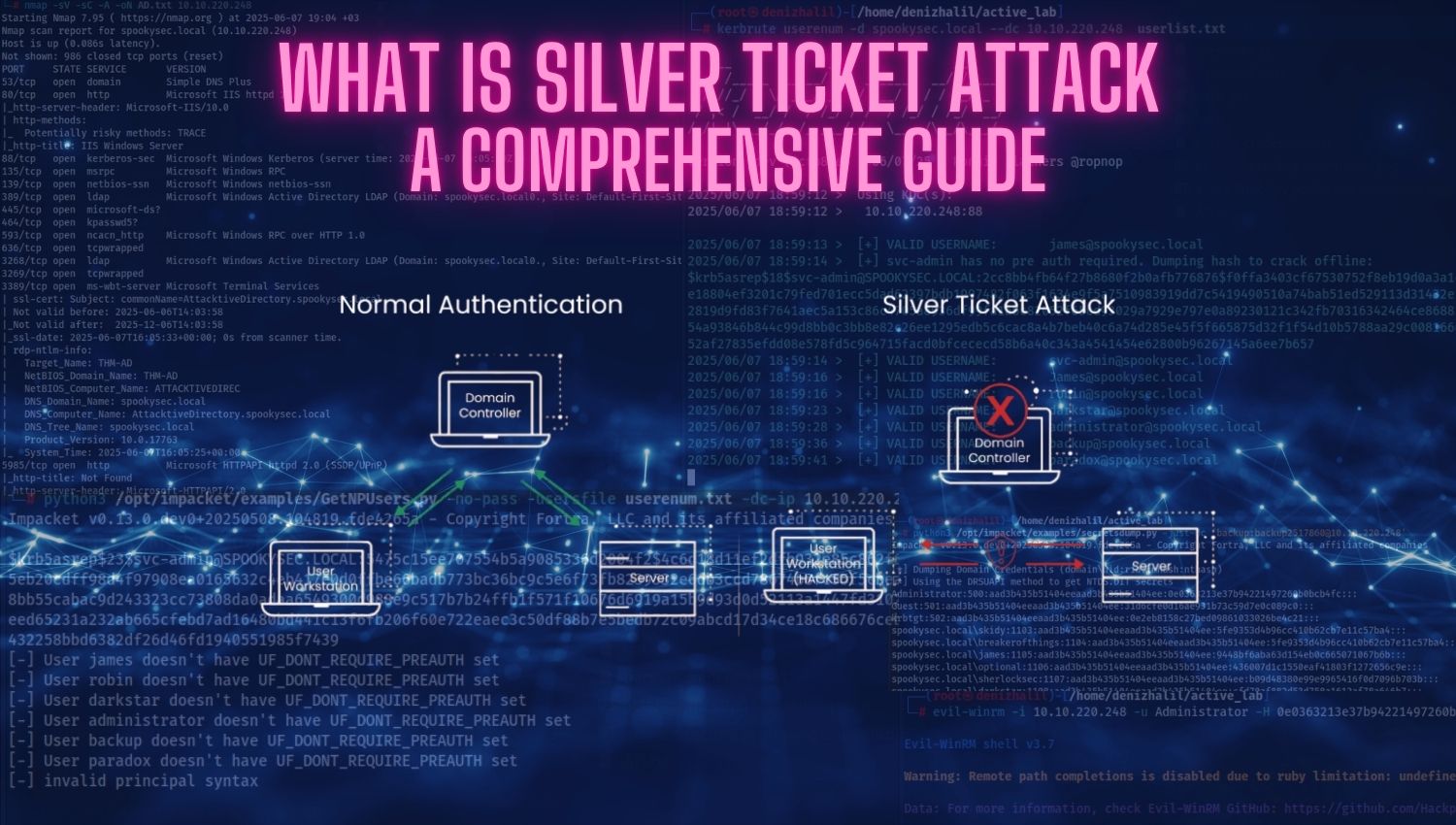
What is Silver Ticket Attack: A Comprehensive Guide

What is Silver Ticket Attack: A Comprehensive Guide

Introduction A Silver Ticket attack is a stealthy Kerberos exploitation technique that allows attackers to access specific network services in an Active Directory environment by forging service tickets. Unlike Golden Tickets, which provide domain-wide access by compromising the KRBTGT account, Silver Tickets exploit individual service account credentials to impersonate authorized users for targeted resources. These attacks bypass the domain

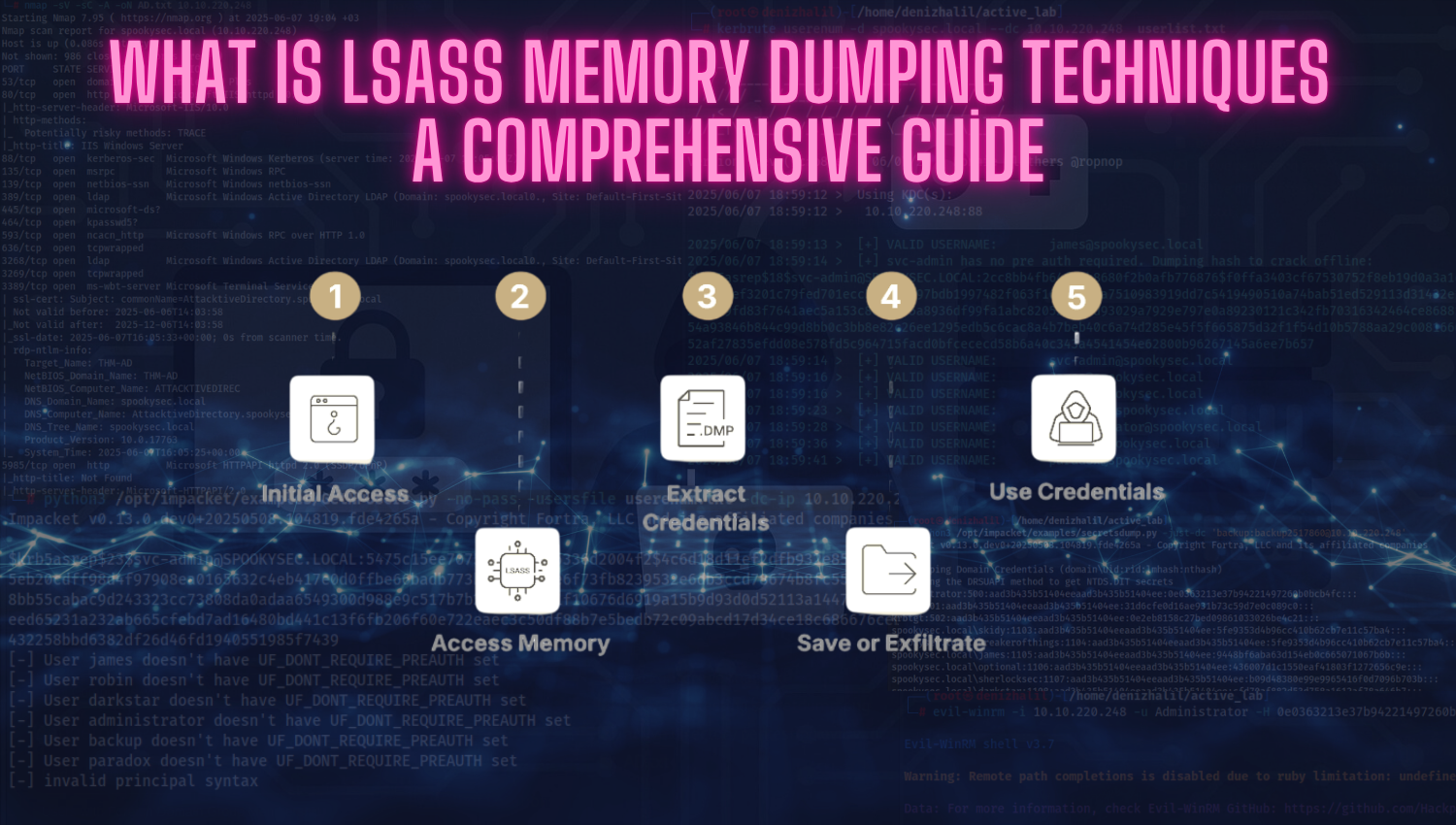
What is LSASS Memory Dumping Techniques: A Comprehensive Guide

What is LSASS Memory Dumping Techniques A Comprehensive Guide

Introduction As cyber threats continuously evolve and become increasingly sophisticated, attackers persistently target critical system processes to extract valuable credentials and maintain persistent access within compromised environments. One of the most targeted components on Windows systems is the Local Security Authority Subsystem Service, better known as LSASS. This core Windows process is responsible for managing user authentication, enforcing security policies, and

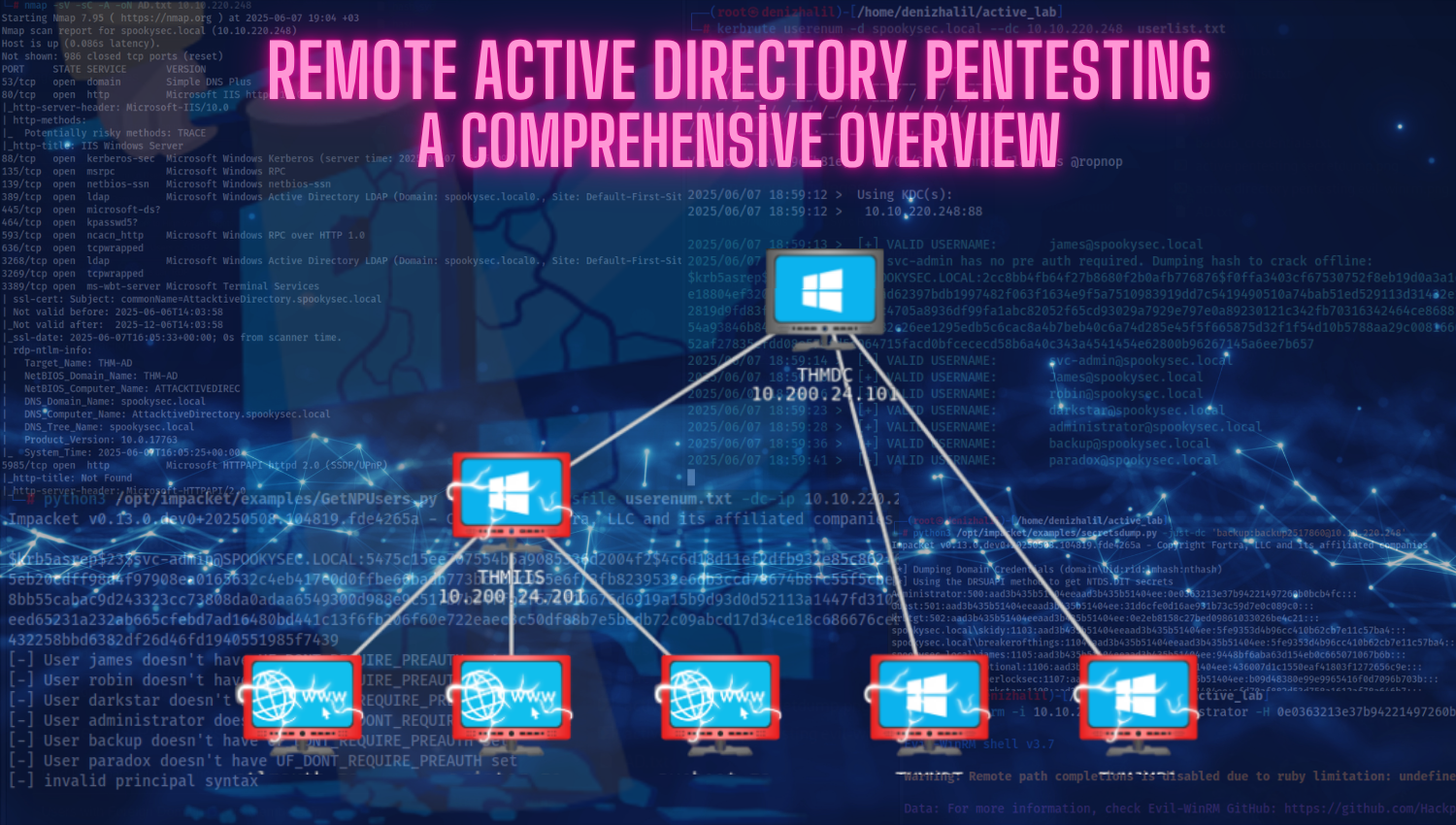
Remote Active Directory Pentesting: A Comprehensive Overview

Remote Active Directory Pentesting A Comprehensive Overview

Introduction Active Directory (AD) serves as the central nervous system for identity and access management in enterprise environments, governing user authentication, resource permissions, and group policies across networks. Despite its critical role, AD environments are frequent targets for attackers due to inherent complexities and common misconfigurations—such as overly permissive access controls, legacy protocol support (e.g., NTLMv1), and unpatched vulnerabilities. Remote Active Directory pentesting simulates adversarial tactics to